
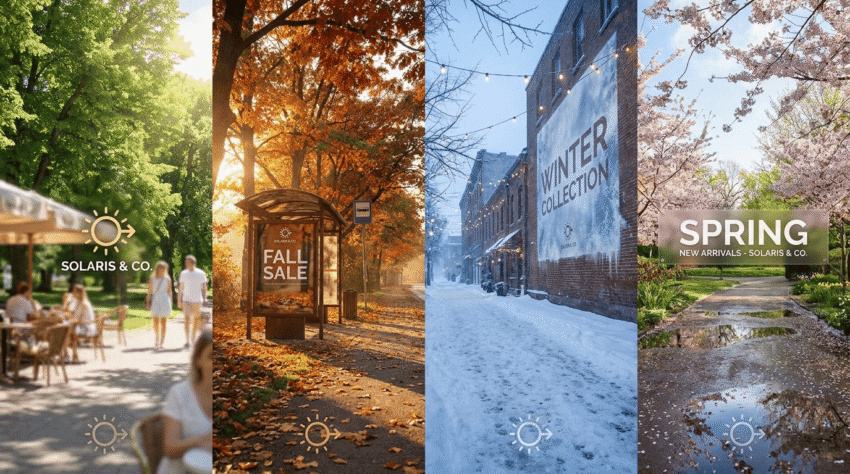
Seasonal marketing has traditionally been one of the most resource-heavy periods for any creative department. The pressure to produce high-volume, high-quality content for Halloween, Black Friday, and the Winter holidays often leads to a massive production bottleneck. Brands are forced to plan photo shoots months in advance, locking in creative decisions before market trends are even fully visible.
The core challenge creators face is the lack of agility in traditional content production. When a brand relies on physical studio shoots, any change in creative direction requires a total restart. This includes re-hiring talent, re-booking locations, and losing weeks to post-production. For Direct-to-Consumer (DTC) brands, this delay is more than an inconvenience; it is a lost revenue opportunity.
The rise of the professional ai image generator has completely shifted this dynamic. Instead of being tethered to a physical set, brands can now generate “studio-quality” assets in minutes. This allows for real-time adjustments to seasonal messaging based on what is actually performing in the market.
The Production Bottleneck in Seasonal Advertising
In the traditional model, a brand might spend fifty thousand dollars on a single holiday campaign shoot. This investment creates a set of static assets that must last for three months. If the weather is warmer than expected or if a competitor launches a similar visual theme, the brand has no way to pivot without spending another fifty thousand dollars.
This rigidity often leads to “creative fatigue” where consumers see the same holiday imagery for weeks on end. Engagement rates drop because the content lacks the freshness required to stand out in a crowded social media feed. Marketers are essentially betting their entire quarterly budget on a single creative hypothesis.
Furthermore, traditional production makes it nearly impossible to test multiple visual styles. You cannot easily swap a snowy mountain background for a cozy indoor fireplace during a physical shoot. Using a modern ai image generator solves this by decoupling the creative idea from the physical limitations of production.
How Professional AI Platforms Bridge the Gap
Not all AI tools are created equal when it comes to brand identity. For a professional marketing team, a tool that “hallucinates” or creates inconsistent characters is worse than no tool at all. This is where the industry is moving away from basic prompt-to-image toys and toward professional creative engines.
A high-end ai image generator must provide more than just a pretty picture. It needs to offer “commercial-ready” output that respects brand colors, product integrity, and character consistency. This level of precision allows brands to maintain a cohesive story across different seasonal phases.
Professional platforms like higgsfield solve the “identity drift” problem that plagues lower-tier AI models. By utilizing specialized workflows, brands can ensure that the same brand character appears in a summer beach setting and then again in a winter holiday scene. This repeatability is the backbone of modern brand building.
Strategy: Achieving Seamless Seasonal Transitions
To effectively use an ai image generator for seasonal campaigns, brands must adopt a modular approach to creative production. Instead of viewing a campaign as a single “finished” file, think of it as a collection of assets that can be swapped and upgraded.
- Create a Master Brand Profile: Use features like Soul ID to lock in your brand’s visual DNA. This ensures that every generated asset feels like it came from the same studio, regardless of the seasonal theme.
- Rapid Prototyping: Before committing to a full campaign, generate ten different seasonal directions. Test these on social media to see which visual language resonates best with your audience.
- Weather-Responsive Content: If an unexpected snowstorm hits a specific region, you can generate and deploy winter-themed ads for that specific location within an hour. This level of hyper-relevance is impossible with traditional photography.
- Multi-Format Expansion: A single high-resolution image should be the starting point for a wider ecosystem. Convert your best seasonal images into high-performance video ads to capture more attention on platforms like TikTok and Instagram.
The economic impact of this shift is documented in recent industry research. The technology could increase marketing productivity by up to 15 percent by automating routine tasks and enabling faster iteration cycles.
Deep Dive: The Higgsfield Creative Engine
In the competitive landscape of digital marketing, higgsfield positions itself as the essential infrastructure for professional creative departments. It is not just a place to “burn tokens” on experimentation. It is a Marketing Studio designed for “shipping creative” that meets professional standards.
The platform unifies several top-tier models into a single, cohesive workflow. This includes models like Higgsfield Soul for professional aesthetics and Seedream for more imaginative, creative concepts. For brands that need high-speed iteration without sacrificing quality, Nano Banana Pro offers a balanced approach to generation.
What sets higgsfield apart is its focus on the “repeatable AI workflow.” Most AI tools are “one-hit wonders” where it is difficult to recreate a successful result. In contrast, this platform is built to handle the rigorous demands of professional design, including native 4K output and brand-accurate color rendering.
Actionable Tips for Marketing Teams
If you are transitioning your seasonal workflow to an ai image generator, start with these three steps to ensure a smooth adoption process:
- Focus on Consistency First: Use “Character Consistency” tools to make sure your brand ambassadors look the same across every image.
- Optimize for Video: Use image-to-video conversion tools to turn static seasonal posts into dynamic ads. Moving images consistently outperform static ones in holiday click-through rates.
- Leverage Advanced Models: Do not settle for generic models. Use specialized ones like FLUX.1 or Higgsfield Soul to get the “cinema-grade” texture that luxury and DTC brands require.
By focusing on these areas, you move from simple AI experimentation to a professional-grade execution. This shift allows your team to spend less time on the logistics of a shoot and more time on the strategy of the campaign.
Overcoming the Hallucination Problem
One of the biggest risks for a brand using an ai image generator is the “hallucination” factor. This happens when the AI adds extra fingers, distorts text, or fails to render a product correctly. For a seasonal campaign, these errors can be embarrassing and costly.
Professional tools like higgsfield address this through specialized training and enhanced control features. By providing a “Marketing Studio” environment, the platform gives creators the precision tools needed to fix these common pitfalls. The goal is perfection in every pixel, which is the baseline requirement for any serious brand.
When you can trust the output, you can scale your production. A brand that once produced five main assets for a holiday campaign can now produce five hundred. This allows for micro-segmentation, where different audiences see seasonal imagery tailored specifically to their interests and demographics.
Conclusion: The New Infrastructure of Brand Design
The shift from traditional shoots to AI-driven campaigns is not just about saving money. It is about the democratisation of high-end production. Smaller brands can now compete with global giants because the “studio-quality” barrier has been removed.
Using an ai image generator is now a strategic necessity for brands that want to remain relevant in a fast-moving digital economy. Whether you are using higgsfield to create social media ads or high-resolution 4K graphics for a website, the speed and precision offered by these tools are unmatched.
The future of seasonal communication is modular, agile, and AI-powered. Brands that embrace these repeatable workflows today will be the ones that dominate the “Golden Quarter” and beyond. By moving from “experimenting with AI” to “shipping with AI,” your brand becomes a high-performance creative engine.