
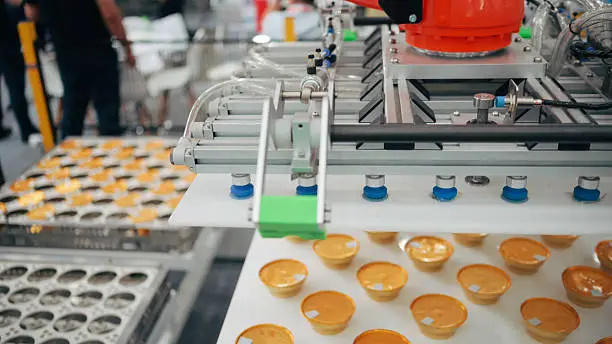
For Fast-Moving Consumer Goods (FMCG) plant managers and packaging procurement directors, maintaining profitability is a constant battle against compressed margins and labor shortages. Food manufacturing facilities must output millions of units weekly while adhering to zero-tolerance sanitary regulations.
Relying on manual labor or outdated converting equipment for these output demands is no longer financially viable. To protect profit margins and meet aggressive corporate sustainability goals, modern facilities are fundamentally re-engineering their end-of-line processes.
This guide explores the mechanical tolerances, hygiene standards, and IIoT integration required to transition secondary and tertiary packaging into fully automated, high-efficiency paper systems.
The Automation Imperative in FMCG Packaging
The FMCG sector is currently navigating severe operational headwinds. Rising raw material costs and chronic shortages in skilled manufacturing labor are squeezing operational margins to historic lows.
For decades, many facilities relied on semi-automated plastic packaging systems. However, global plastic bans and the drive for sustainable supply chains are forcing a rapid transition toward paper-based flexible packaging. Paper substrates require far higher mechanical precision to handle than stretchable polymer films.
Consequently, transitioning secondary and tertiary packaging from semi-automated processes to fully automated paper systems is the only sustainable pathway. Without advanced automation, the mechanical stress of handling paper at high speeds leads to unacceptable material waste and labor bottlenecks.
Throughput Metrics for Automated Paper Packaging Systems
In high-volume food production environments, the throughput of secondary packaging lines dictates overall plant efficiency. Engineers must evaluate machinery based on structural stability and continuous output rates under heavy operational loads.
For reference, leadingfabricante de maquinaria de embalaje (packaging machinery manufacturers) like KETE Group design paper bags and flexible packaging systems capable of sustaining high speeds while maintaining minimal mechanical deviation. Integrating robust mechanical tolerances is critical for ensuring that high-speed web tension does not result in material jams or compromised seals.
When upgrading a facility, procurement directors must focus on these core engineering metrics:
- Bags Per Minute (BPM): The baseline output speed, which must remain consistent without causing paper tearing or adhesive failure.
- Web Tension Control: Automated servo-driven rollers that micro-adjust tension to prevent snapping during high-speed unwinding.
- Jam Rates: The frequency of mechanical blockages, which must be minimized through frictionless paper-path engineering.
Maintaining Hygiene and Preventing Cross-Contamination
Unlike general manufacturing, food packaging environments operate under strict zero-tolerance sanitary protocols, such as HACCP and FDA standards. The machinery itself must be designed to actively prevent bacterial buildup and cross-contamination.
Engineers must specify equipment built with seamless, food-grade stainless steel frames. These structures eliminate the microscopic crevices and exposed threading where organic food dust and moisture typically accumulate.
Furthermore, true washdown compatibility (IP65 or IP67 ratings) is non-negotiable. Facilities must be able to sanitize equipment using high-pressure, caustic cleaning agents without damaging internal electronics. The use of oil-free pneumatic components further ensures that aerosolized lubricants cannot contaminate the paper substrates.
IIoT and Predictive Maintenance in Packaging Lines
Relying on reactive maintenance—waiting for a machine to break before fixing it—destroys Overall Equipment Effectiveness (OEE). In a high-volume FMCG plant, a single hour of unplanned downtime can cost tens of thousands of dollars in delayed shipments and spoiled product.
Modern packaging lines mitigate this risk through the Industrial Internet of Things (IIoT). Networked sensors are embedded directly into the machinery to continuously monitor the vibration, temperature, and torque of critical servo motors.
When an anomaly is detected, the system immediately alerts facility engineers of abnormal wear before a catastrophic failure occurs. This shift to predictive maintenance ensures that part replacements happen during scheduled changeovers, reducing unplanned downtime to near zero.
Meeting Global Food Safety and Sustainability Mandates
Upgrading packaging infrastructure extends beyond internal operational efficiency; it is a global regulatory imperative. Modernizing plant operations is a necessary step for multinational corporations looking to remain compliant with tightening environmental legislation.
According to the Food and Agriculture Organization (FAO) of the United Nations, optimizing the food supply chain with advanced, resilient packaging solutions is vital to globallyreduce food loss and waste.
Transitioning to highly automated, precise paper packaging not only aligns with corporate ESG (Environmental, Social, and Governance) goals but ensures strict adherence to international sanitary mandates. Facilities that fail to upgrade risk falling out of compliance with both environmental watchdogs and elite retail distributors.
Conclusion: Steps to Audit Your Packaging Line OEE
Automating FMCG packaging lines is a highly technical, capital-intensive process. However, the integration of high-speed servo mechanics, IIoT predictive sensors, and washdown-compatible framing guarantees an immediate and sustained return on investment.
The most prudent first step for any plant manager is to conduct a rigorous audit of their current production floor. By utilizing the Overall Equipment Effectiveness (OEE) formula—multiplying availability, performance, and quality—managers can accurately identify the financial drain of legacy machines and build a data-backed roadmap for automation.
takinglongway.com