
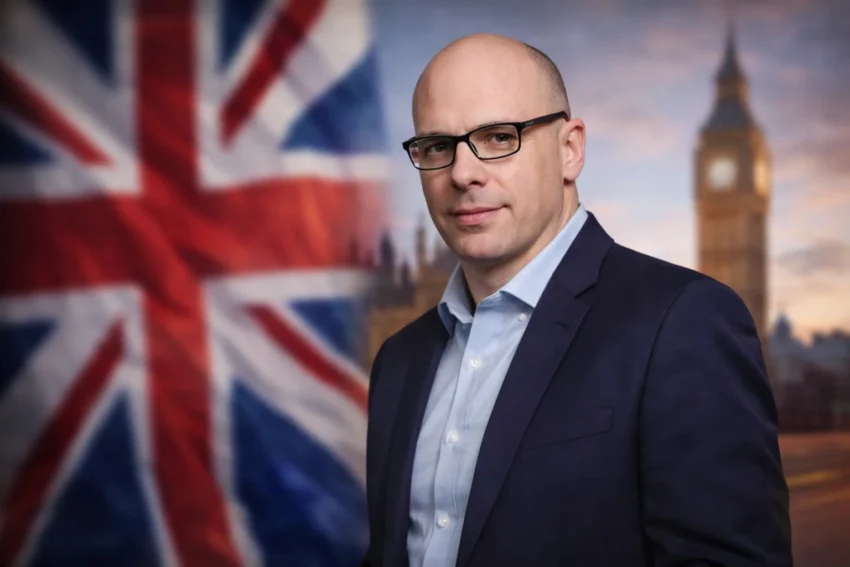
By all accounts, Laza didn’t chase fame. His name started surfacing because of proximity to power, not a hunger for headlines. Yet over time, he became something else entirely: a translator between politics and the public, someone who understands both the machinery of government and the rhythms of broadcast media. That’s not a common skill set, and it explains why his profile has steadily grown.
Early Life and Background
Matthew Laza’s early life remains largely private, and that silence is telling in its own way. Unlike many public figures, he hasn’t offered detailed interviews about his upbringing, family, or formative years. That absence has forced anyone researching him to rely on professional milestones rather than personal anecdotes, which is unusual in an age where biographies often begin with childhood stories.
Still, fragments of his early trajectory can be pieced together through later references. Before entering television, Laza was involved in political advocacy, including leading a Labour-aligned pro-European organization. That suggests he was politically engaged long before he became visible within mainstream media circles, and it hints at a foundation rooted in policy and ideology rather than performance alone.
Anyone who has worked in political media would recognize the pattern. People who move into high-pressure broadcast environments usually carry strong political instincts already. They understand arguments, messaging, and timing before they ever step into a studio. In Laza’s case, that early involvement likely shaped the way he later approached both journalism and political strategy.
A Career Built Inside Television
Long before his name appeared in political reporting, Matthew Laza was working behind the scenes in British television. He spent more than a decade as a BBC current affairs programme maker, a role that requires both editorial judgment and a sharp sense of audience expectations. That kind of experience doesn’t just teach you how to tell stories; it teaches you how to anticipate how those stories will be received.
During his time in broadcasting, Laza worked on widely viewed programmes, including Rip Off Britain, a show known for tackling consumer issues and public concerns. He also held production roles on projects like The Heaven and Earth Show and contributed to documentary work such as Posh and Posher: Why Public School Boys Run Britain in 2011. Those credits may seem varied, but they share a common thread: explaining complex systems in ways ordinary viewers can understand.
The truth is, television production is one of the best training grounds for political communication. Producers spend years watching how politicians perform under pressure, how they respond to unexpected questions, and how small moments can shift public perception. By the time Laza transitioned into politics, he had already seen firsthand what worked and what failed when leaders faced the camera.
Moving Into Labour Party Strategy
The shift from television to frontline politics came into public view in 2014, when Ed Miliband appointed Matthew Laza as head of broadcasting. At the time, Miliband’s team was under intense scrutiny over how the Labour leader came across on television. Every interview was dissected, and every misstep became front-page news.
Bringing in someone with deep television experience wasn’t just a staffing decision; it was a signal. It showed that Labour recognized how critical media performance had become. Laza’s role was to prepare, refine, and sometimes protect the party’s messaging in an environment where perception often shaped reality.
What’s surprising is how quickly his name began circulating in political circles after that appointment. He wasn’t a public-facing figure in the traditional sense, but insiders knew his job mattered. By the time the 2015 general election approached, Laza had become part of the inner team advising the leader of the opposition, helping shape how Labour presented itself to millions of voters.
Life Inside the Pressure of a General Election
Working on a general election campaign is a different kind of intensity altogether. The days stretch longer, the stakes feel higher, and every decision can carry national consequences. For someone like Laza, whose expertise lay in communication, the pressure was relentless.
Campaign periods compress everything. A poorly delivered line in a televised debate can overshadow weeks of policy work. A strong interview, on the other hand, can reset the narrative overnight. Laza’s role placed him right at the center of those moments, where preparation meets unpredictability.
According to contemporaneous reporting, his task was not just technical but strategic. He had to ensure that Miliband’s message came across clearly while also navigating a media environment that could be hostile or skeptical. That balancing act defines modern political advising, and it’s one of the reasons figures like Laza have become so valuable.
Transition to Policy and Think Tank Work
After the 2015 election, Laza’s career took another turn, this time toward policy and intellectual debate. He became director of Policy Network, a centre-left think tank focused on progressive politics across Europe and beyond. That role placed him in a different kind of influence, one less visible but still deeply connected to political outcomes.
At Policy Network, Laza contributed to reports and discussions on issues ranging from financial fraud to emerging technologies. One of the notable publications he co-authored in 2017, It Could Be You, examined the growing problem of fraud in the UK and its impact on ordinary citizens. Another report explored the future of autonomous vehicles, showing a willingness to engage with technological change.
That phase of his career reveals something important. Laza was not just a media strategist; he was also comfortable working with policy substance. Think tanks require a different pace and a different kind of thinking, one that blends research with persuasion. His presence there suggests he could move between those worlds without losing credibility.
Personal Life and Relationships
Matthew Laza has kept his personal life largely out of the public eye, a choice that stands out in an era where many public figures share extensively. There are no widely verified accounts of his marital status, family life, or children, and he has not made those details part of his public persona.
What is known, however, reflects a broader context. In 2014, coverage noted that he was among the first openly LGBT advisers within Ed Miliband’s team, a detail that carried cultural and political significance at the time. That visibility, even if understated, placed him within a wider conversation about representation in British politics.
Anyone who has worked in high-level advisory roles would tell you that privacy often becomes a necessity. The work is demanding, the scrutiny can be intense, and separating personal life from public responsibilities is often the only way to maintain balance. Laza appears to have made that separation deliberately.
Media Commentary and Public Appearances
In recent years, Matthew Laza has become more visible as a commentator on British politics. His appearances on outlets such as LBC, Times Radio segments shared online, and GB News discussions have introduced him to a wider audience. He is often described as a former Labour adviser, a label that signals both his experience and his perspective.
What makes his commentary stand out is the way it blends insider knowledge with broadcast clarity. He speaks in a style that feels shaped by years of television work, concise, direct, and aware of how viewers process information. That combination makes him a natural fit for modern political media.
There’s also a practical reason he keeps getting invited back. Broadcasters value guests who can explain complex party dynamics without sounding rehearsed. Laza’s background allows him to do that, offering insights into how decisions are made inside political organizations while keeping his explanations accessible.
Financial Standing and Professional Value
Public information about Matthew Laza’s net worth is limited, and no verified figures are available as of 2026. That’s not unusual for individuals whose careers span public service, media, and think tanks rather than private industry or entertainment.
Still, his professional value is easier to understand than any specific number. Roles at the BBC, senior advisory positions within a major political party, and leadership within a respected think tank all point to a career built on expertise rather than celebrity. Those positions typically come with steady, if not extravagant, compensation and significant influence.
The truth is, influence in politics rarely shows up as a clear financial figure. It appears in access, in credibility, and in the ability to shape conversations. Laza’s career reflects that kind of currency more than traditional measures of wealth.
Lesser-Known Aspects of His Life
Not many people know this, but Laza’s career path includes an early focus on pro-European advocacy within the Labour movement. That detail often gets overshadowed by his later roles, yet it provides context for his policy interests and his alignment with certain strands of centre-left politics.
Another interesting detail lies in his production work. Projects like Posh and Posher tackled themes of class and power in Britain, subjects that remain central to political debate today. That connection between his media work and his later political roles suggests a continuity of interest rather than a sudden shift.
Anyone who has followed his appearances might also notice his consistency in tone. He doesn’t rely on theatrical delivery or exaggerated claims, even in heated discussions. That restraint likely comes from years spent producing content rather than starring in it, where clarity often matters more than volume.
There’s also the simple fact that his career spans multiple disciplines. Moving from broadcasting to political advising to think-tank leadership is not a common trajectory. It requires adaptability and a willingness to learn new systems, qualities that tend to define long-lasting careers.
Frequently Asked Questions
Who is Matthew Laza?
Matthew Laza is a British political adviser, former BBC producer, and media commentator. He gained recognition for his role advising Ed Miliband before the 2015 general election and later for his work with Policy Network. His career bridges television, politics, and policy.
What did Matthew Laza do at the BBC?
He worked as a current affairs programme maker for more than a decade, contributing to shows such as Rip Off Britain. His role involved producing content that explained complex issues to a broad audience. That experience shaped his later approach to political communication.
Was Matthew Laza involved in UK politics?
Yes, he served as head of broadcasting for Ed Miliband and was part of the Labour leader’s advisory team. His work focused on media strategy and public messaging during a crucial election period. That role placed him at the center of high-stakes political communication.
Is Matthew Laza still active in media?
He continues to appear as a commentator on British political issues, featuring on platforms like LBC and other broadcast outlets. His insights often draw on his experience within Labour and the broader political system. Those appearances have increased his public visibility.
What is known about his personal life?
Very little verified information is available about his family or relationships. He has maintained a private personal life, choosing not to share those details publicly. The limited information that exists focuses mainly on his professional achievements.
Conclusion
Matthew Laza’s story doesn’t follow the usual arc of political fame. He didn’t rise through elected office or build a public brand from scratch. Instead, he built influence quietly, through roles that required precision, judgment, and an understanding of how people listen.
What stands out is the consistency of his work. Whether producing television, advising a party leader, or contributing to policy debates, he has stayed close to one central idea: communication matters. Not just what is said, but how it is said and how it is heard.
That perspective feels especially relevant now, when political messages travel faster than ever and public attention can shift in seconds. Figures like Laza remind us that behind every headline and every televised moment, there are people shaping the way those moments unfold.
His career continues to evolve, and his appearances suggest he’s far from stepping away from the conversation. As long as politics and media remain tightly connected, voices like his will keep finding a place in the discussion, explaining, interpreting, and sometimes challenging the narratives that define public life.