

Eileen Tate became a name of public interest because of the men around her, but her own story is quieter, more ordinary, and in many ways more revealing. She is best known as the mother of Andrew Tate and Tristan Tate, two former kickboxers who became famous online, and as the former wife of Emory Tate, the American chess International Master remembered for his brilliant attacking style. Yet Eileen herself has never built a public career, courted fame, or made her family history into a personal brand. That contrast is the starting point for any honest account of her life.
What makes Eileen Tate interesting is not celebrity in the usual sense. It is the way a private woman from Luton, England, became attached to one of the most argued-about family names on the internet. Her life sits at the intersection of motherhood, divorce, migration, working-class struggle, and public curiosity. Most of what is known about her comes through family records, media profiles of her sons, and accounts of her former husband’s life.
The facts that can be stated with confidence are limited but meaningful. Eileen married Emory Andrew Tate Jr. in the 1980s, had three children with him, and later raised them in England after the marriage ended. Her children are Andrew Tate, Tristan Tate, and Janine Tate. While Andrew and Tristan became highly visible public figures, Eileen remained almost entirely outside the spotlight.
Early Life and Luton Background
Eileen Tate is generally associated with Luton, a town in Bedfordshire, England. Public references to her often identify her as Eileen Ashleigh of Luton, which appears in accounts connected to Emory Tate’s life. Her early childhood, parents, schooling, and private family background have not been widely documented. That absence is important because it reminds readers that she was not originally a public figure.
Luton is not just a passing detail in her story. It became the town where her children spent key parts of their upbringing after the family moved back from the United States. The town has often appeared in Andrew Tate’s public descriptions of his early life, usually as a symbol of modest circumstances and struggle. For Eileen, however, Luton appears less as a talking point and more as home.
There is no reliable public record showing that Eileen sought a career in entertainment, politics, media, or business. She has been described in widely repeated reports as having worked as a catering assistant. That detail has become part of the family’s public story because it contrasts with the wealth and luxury image later promoted by Andrew and Tristan. It also points to a more grounded reality: she was known as a working mother before she was known as the mother of famous sons.
Marriage to Emory Tate
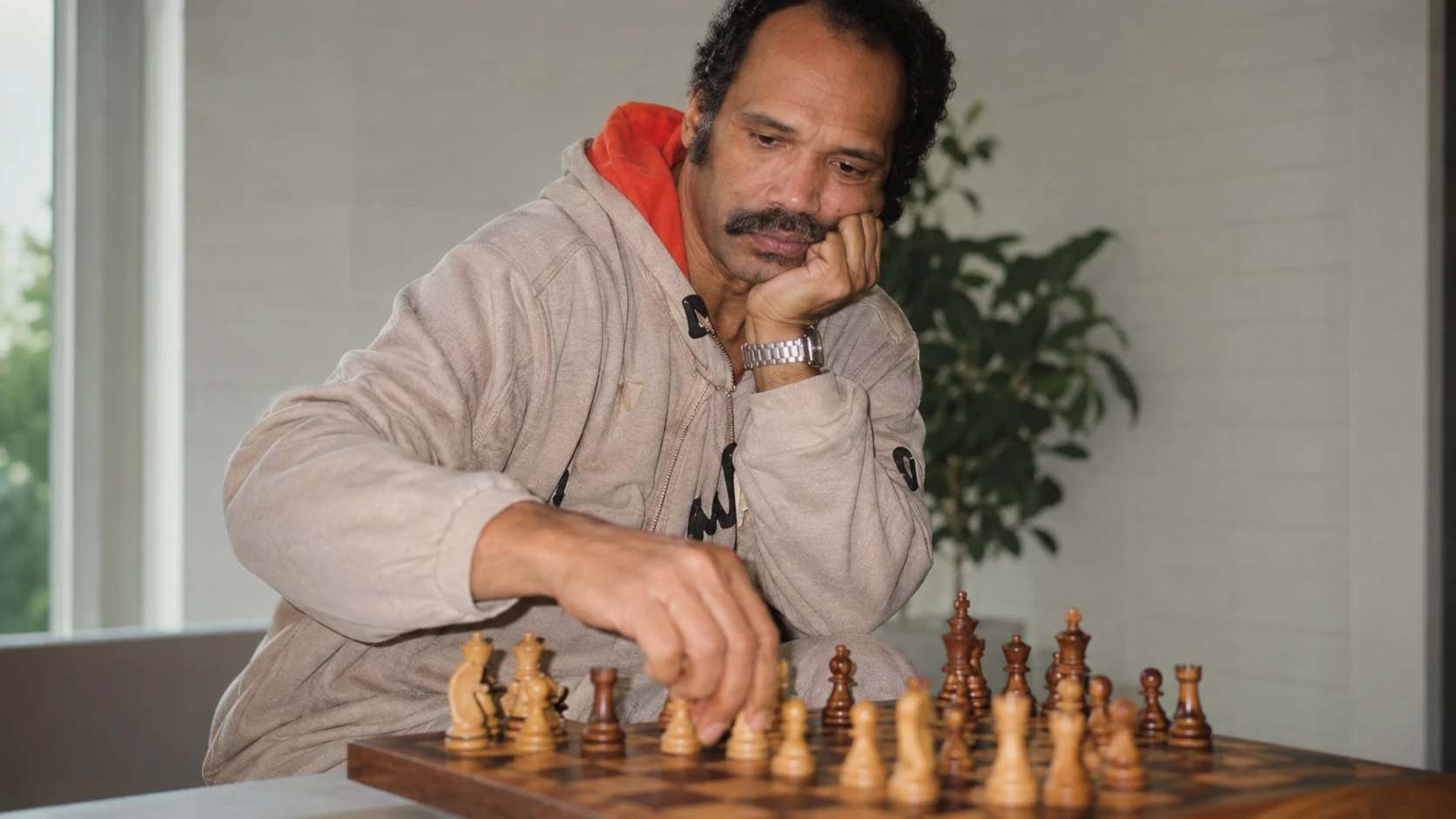
Eileen Tate’s marriage to Emory Andrew Tate Jr. connected her life to a remarkable figure in American chess. Emory Tate was born in Chicago in 1958 and later served in the United States Air Force. He became known in chess circles for bold, tactical play and a style that made his games memorable. He was never a quiet technician at the board; he was admired for imagination, risk, and fighting spirit.
Eileen and Emory married in 1985, according to family biographical accounts. Their marriage brought together an English woman from Luton and an American serviceman and chess player whose life moved between military service, tournaments, teaching, and travel. Their first child, Emory Andrew Tate III, better known as Andrew Tate, was born in 1986. Tristan and Janine followed, completing a family that would later become the subject of intense public attention.
The marriage eventually ended in divorce, commonly reported as taking place in the late 1990s. After the separation, Eileen returned to England with the children. That decision became one of the defining turns in the Tate family story, because it placed Andrew, Tristan, and Janine in a British upbringing rather than an American one. It also made Eileen the central day-to-day parent during a crucial part of their childhood.
Raising Andrew, Tristan, and Janine

Eileen Tate’s most important public role was as the mother who raised three children after a family split. Andrew and Tristan have spoken often about hardship, discipline, and ambition, and their childhood in Luton has become part of their public mythology. Behind that story was a mother managing ordinary responsibilities without the cushion of fame or public wealth. That part of the story is less flashy, but it is essential.
Andrew Tate was born in Washington, D.C., and later grew up partly in England. Tristan Tate also spent his formative years in Luton, where he and Andrew later trained in combat sports. Their sister, Janine Tate, chose a much more private life and has not made public attention part of her identity. The three siblings show how the same family background can lead to very different adult paths.
Eileen’s reported work as a catering assistant has often been used to describe the family’s financial position. It suggests a household shaped by practical work, limited resources, and the ordinary pressures of raising children after divorce. That does not mean every detail of their private life is known or should be guessed. It means the public image of later Tate wealth should be understood against a much more modest family backdrop.
Life as a Working Mother
The phrase “working mother” can sound simple, but in Eileen Tate’s case it carries much of the known story. She appears to have lived a life centered on earning, parenting, and keeping a household together while her former husband remained a powerful figure in family memory. There is no evidence that she had the kind of public support system or celebrity income people now associate with the Tate name. Her role was practical before it became biographical.
Catering work is often demanding, underpraised, and physically tiring. If the accounts of her employment are accurate, Eileen’s working life likely involved routine service labor rather than glamorous opportunity. That fact helps explain why her sons later framed their rise as an escape from difficult conditions. But here’s the thing: her work should not be reduced to a background detail in someone else’s success story.
Many public accounts of famous men give the father the drama and the mother the responsibility. In the Tate family story, Emory is remembered as the chess genius and Andrew often casts him as a model of intellect and force. Eileen is remembered more quietly, through the everyday facts of care, work, and stability. That imbalance says a lot about how public memory treats parents.
Relationship With Emory Tate After Divorce
Little is publicly known about Eileen Tate’s relationship with Emory Tate after their divorce. The available record does not give a detailed account of custody arrangements, private disagreements, or how often the children saw their father. Andrew and Tristan have both spoken about Emory with admiration, especially his intelligence and independent spirit. That admiration helped keep Emory’s presence alive in the family story even after the marriage ended.
Emory Tate died in 2015 after collapsing during a chess tournament in California. His death was deeply felt in chess circles, where he was remembered as a gifted, original player who inspired affection as well as awe. For Andrew and Tristan, his death also strengthened the image of their father as a heroic figure. Eileen did not step forward publicly to shape that legacy.
That silence is consistent with the rest of her public life. She has not appeared eager to explain the marriage, correct public impressions, or compete with the stories told by her sons. Some readers may find that frustrating because they want her version of events. A fair biography has to accept that not every private life becomes available just because the public is curious.
Andrew Tate and the Public Spotlight
Eileen Tate’s name became far more searchable after Andrew Tate became famous online. Andrew first gained public attention through kickboxing, then reality television, and later social media. He built a large following through blunt, combative statements about masculinity, money, women, discipline, and power. His rise made many people curious about the family that shaped him.
That curiosity often turns toward Eileen because mothers are frequently treated as clues to a public figure’s character. People want to know whether she approved of Andrew’s views, whether she challenged them, or whether his public persona was a rejection of his upbringing. The honest answer is that very little is publicly confirmed. Eileen has not made herself a regular commentator on Andrew’s career or controversies.
Some reports have claimed she disapproved of Andrew’s more extreme statements, but such claims are often repeated without direct, verifiable sourcing. It is safer to say that she has remained largely private while her son became one of the most polarizing internet figures of his generation. Her privacy should not be mistaken for approval, disapproval, or indifference. Silence can mean many things, especially for someone who never asked to become part of a global argument.
Tristan Tate and the Family Image
Tristan Tate followed a path closer to Andrew’s than Janine’s. He competed in kickboxing, appeared in public with his brother, and became part of the same online brand of wealth, confidence, and male status. Together, Andrew and Tristan presented themselves as self-made men who had escaped modest beginnings. Their mother’s reported working-class background became part of that story, even when she herself was not speaking.
The brothers’ public image has always depended on contrast. They talk about money after describing struggle, promote luxury after referencing hardship, and present discipline as the bridge between the two. Eileen’s life is often used as part of the “before” picture in that narrative. But a mother’s life is not just raw material for a son’s brand.
There is also a difference between biography and mythology. Biography asks what can be verified, what context matters, and where uncertainty remains. Mythology turns people into symbols. Eileen Tate is often pushed toward the second category online, but the more respectful approach is to keep her human, limited, and real.
Janine Tate and the Private Side of the Family
Janine Tate, Eileen’s daughter, is often mentioned briefly because she has not pursued the same public path as her brothers. She is widely described as a private professional woman, and unlike Andrew and Tristan, she has not built a major public platform around the Tate surname. Her lower profile makes her an important part of the family picture. It shows that visibility was not inevitable for every child in the household.
Eileen’s own privacy may have more in common with Janine’s public restraint than with Andrew and Tristan’s fame. Both women are known largely because of their relation to more public male family members. Neither has made a living from constant online attention. That shared distance from publicity is worth noticing without turning it into a dramatic claim.
The existence of a private sibling also complicates easy explanations about upbringing. If three children grew up with the same parents but chose different adult lives, no single family fact can explain everything. Personality, opportunity, choice, peer groups, and later experience all matter. Eileen’s role belongs in that wider frame, not in a simplified cause-and-effect story.
Public Image and Media Portrayal
Eileen Tate’s public image is unusually thin for someone whose name is widely searched. Many online profiles repeat the same basic details: she is from Luton, she married Emory Tate, she had three children, she worked as a catering assistant, and she raised the children after divorce. Beyond that, much of what appears online is speculation. The lack of confirmed detail has encouraged low-quality pages to fill the gaps.
This is where responsible writing matters. Eileen should not be treated like a celebrity who built her own fame and then invited public inspection. She is better understood as a private person caught in the orbit of famous relatives. That changes the ethical balance of the story. Readers deserve accurate information, but she does not owe the public intimate details of her private life.
The media often frames her through contrast with Andrew Tate. He is loud, wealthy, aggressive, and endlessly public; she is quiet, ordinary, private, and associated with work and family. That contrast is useful, but it can become lazy if overused. A person’s value should not depend only on how different she is from her son.
Net Worth and Financial Questions
There is no credible public net worth figure for Eileen Tate. Many websites attach numbers to private relatives of celebrities, but those figures usually lack documents, financial records, or clear methods. In Eileen’s case, there are no widely known business filings, entertainment contracts, public salary records, or property disclosures that support a serious estimate. Any exact figure should be treated as guesswork.
Her reported income source was ordinary employment, not celebrity work. She has not been known to sell courses, run public companies, publish memoirs, or appear in paid media projects. That makes her financial profile very different from Andrew and Tristan, whose public identities are closely tied to wealth claims. It also means her personal finances should not be inferred from theirs.
Some readers ask whether Andrew or Tristan financially support her. Publicly available information does not confirm the details of any private family support. It would be irresponsible to claim she is wealthy because her sons display wealth, just as it would be irresponsible to claim she is financially struggling without evidence. The most accurate answer is that her net worth is not publicly verified.
Controversies Connected to the Tate Name
Eileen Tate herself is not known for public controversy. The controversies connected to her name come from her sons, especially Andrew and Tristan. They have faced legal scrutiny and public criticism, and Andrew’s statements about women and society have drawn strong backlash. Because Eileen is their mother, her name sometimes appears in searches linked to those issues.
That connection needs careful handling. A parent is not automatically responsible for an adult child’s public behavior, business decisions, or legal problems. Eileen is not known to be involved in the allegations or legal matters surrounding her sons. Her relevance is biographical, not legal.
Public curiosity often turns family members into supporting characters in a scandal. That can distort the truth by making private relatives seem more involved than they are. In Eileen’s case, the responsible line is clear: she is part of the family background, but the public controversies belong to the people who created them. Her life should not be defined only by headlines about others.
What Eileen Tate Is Doing Now
Eileen Tate’s current life is not widely documented in reliable public sources. She is generally believed to remain a private figure connected to England, but details about her home, daily routine, relationships, or personal views are not publicly confirmed. That absence should not be treated as mystery for mystery’s sake. It is the normal privacy of a person who has not chosen public life.
Unlike Andrew and Tristan, she does not appear to maintain a major social media presence or public-facing brand. She has not become a frequent interview subject, media commentator, or public defender of her family. Her lack of visibility may be deliberate, or it may simply reflect the life she has always lived. Either way, it deserves to be respected.
The truth is, Eileen Tate’s current status is best described with restraint. She remains known primarily as the mother of Andrew, Tristan, and Janine, and as the former wife of Emory Tate. She is a private woman whose public biography is built from a small number of reliable facts. That may not satisfy every online search, but it is the honest answer.
Why Eileen Tate Still Matters
Eileen Tate matters because she represents the private foundation beneath a very public family story. She raised children who went on to become known in drastically different ways, from Andrew and Tristan’s notoriety to Janine’s quieter professional life. Her story also adds class and family context to the Tate brothers’ public claims about struggle and ambition. Without her, the family history is incomplete.
She also matters because her case shows how fame can spread beyond the person who seeks it. Andrew Tate chose visibility, controversy, and attention as part of his career. Eileen did not appear to make that same choice. Yet her name became part of the public conversation because internet fame often pulls relatives into view.
There is a broader lesson here about how we read biographies of people connected to controversy. The public may want simple explanations, but families rarely provide them. Eileen’s life can help explain the setting in which Andrew and Tristan grew up, but it cannot explain every choice they made. Context is useful; blame without evidence is not.
Frequently Asked Questions
Who is Eileen Tate?
Eileen Tate is the mother of Andrew Tate, Tristan Tate, and Janine Tate. She is also the former wife of Emory Tate, the American chess International Master known for his creative and aggressive style of play. She is associated with Luton, England, where she raised her children after her marriage ended.
She became publicly known because of her family, not because she sought fame herself. Unlike Andrew and Tristan, she has not built a public media career or online brand. Most reliable information about her comes through accounts of her former husband and children.
What was Eileen Tate’s job?
Eileen Tate has widely been described as having worked as a catering assistant. This detail is often used in profiles of Andrew Tate to explain the family’s modest background during his upbringing in England. There is no widely available public record giving a full account of her career history.
Because she is a private person, it is best to avoid overstating what is known. Her reported work suggests a practical, working life centered on supporting her family. It does not provide enough evidence to describe her full financial history or personal ambitions.
Was Eileen Tate married to Emory Tate?
Yes, Eileen Tate was married to Emory Andrew Tate Jr., the American chess player and International Master. The couple married in the 1980s and had three children together. Their children are Andrew Tate, Tristan Tate, and Janine Tate.
The marriage later ended in divorce, and Eileen returned to England with the children. Emory remained an important figure in the family story, especially in the way Andrew and Tristan later spoke about their father. Eileen, by contrast, remained much more private.
How many children does Eileen Tate have?
Eileen Tate has three children: Andrew Tate, Tristan Tate, and Janine Tate. Andrew and Tristan became public figures through kickboxing, business ventures, and online media. Janine Tate has kept a much lower public profile.
The siblings’ different public paths are important to the family story. Andrew and Tristan chose high visibility, while Janine has stayed largely private. Eileen’s own life appears closer to that private side of the family.
Is Eileen Tate rich?
There is no reliable public evidence showing that Eileen Tate is rich, and there is no verified net worth figure for her. Online estimates should be treated with caution because they usually do not cite financial records. Her reported work as a catering assistant points to an ordinary working background rather than public wealth.
It is also not accurate to assume her finances based on her sons’ public wealth claims. Family relationship does not prove financial support or shared assets. The most honest answer is that her personal financial status is not publicly confirmed.
Is Eileen Tate involved in Andrew Tate’s controversies?
Eileen Tate is not known to be involved in Andrew Tate’s public controversies or legal issues. Her name appears in searches because she is his mother and part of his family background. That does not mean she participated in or endorsed his statements, business activities, or alleged conduct.
This distinction matters because private relatives are often dragged into public scandals unfairly. Eileen’s role is biographical, not legal or professional. Any claim beyond that would need strong evidence.
Where is Eileen Tate now?
Eileen Tate’s current daily life is not well documented in reliable public sources. She is generally associated with England and has long been linked to Luton, but details about her present home or routine are private. She does not appear to live as a public media figure.
Her low profile is consistent with the rest of her story. She has stayed outside the publicity that surrounds Andrew and Tristan. For that reason, any detailed claims about her current life should be treated carefully unless they come from a reliable source.
Conclusion
Eileen Tate’s biography is not a story of public ambition, fame, or reinvention. It is the story of a private woman whose name became widely searched because of the extraordinary visibility of her family. She was married to a gifted chess player, raised three children after divorce, and became part of a public narrative she did not appear to seek. That alone makes her story worth telling carefully.
Her life also challenges the way people talk about famous families. It is easy to turn a mother into a symbol, especially when her son becomes controversial. But Eileen Tate is not just a clue to Andrew Tate, and she is not a public explanation for everything he became. She is a person whose known life deserves the same caution and dignity given to anyone outside the spotlight.
The most truthful portrait is modest but meaningful. Eileen Tate was a working mother from Luton connected to a brilliant chess player and to children who took very different roads into adulthood. Her public importance lies less in what she has said than in what her life reveals about family, class, privacy, and the cost of fame that spreads beyond the famous person.
In the end, Eileen Tate remains a private figure at the edge of a very public story. Readers may search for her because of Andrew and Tristan, but the better answer is not gossip or speculation. It is a clear recognition that behind the Tate name is a woman whose quiet life helped shape the family before the world was watching.