
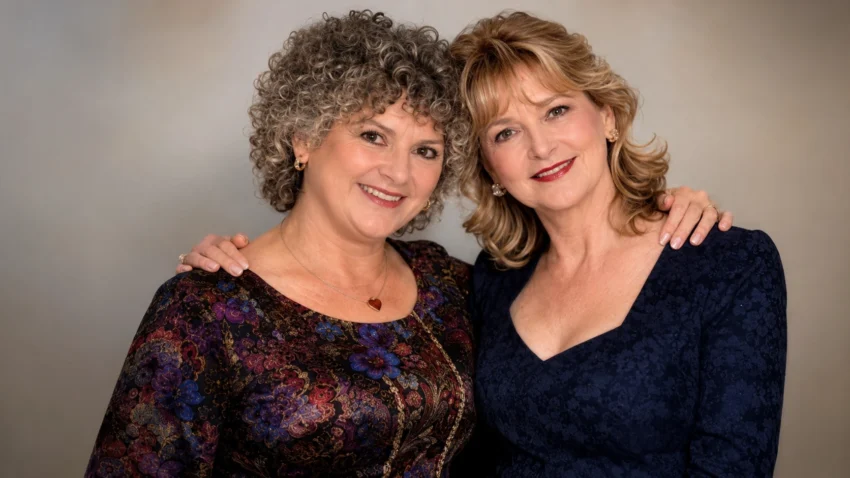
Heather Sutherland is often searched because of one very public connection: her long relationship with actor Miriam Margolyes. Yet the fuller story is not a celebrity footnote. Heather Amanda Sutherland is an Australian historian whose academic life has been devoted to Indonesia, Southeast Asia, colonial administration, maritime trade, and the ways power moved through ports, offices, ships, and local elites.
Her name sits at an unusual crossroads. To general readers, she is the private partner of one of Britain’s most outspoken and beloved performers. To historians, she is a serious scholar whose books and articles helped shape the study of Dutch colonial rule in Indonesia and the eastern archipelagos of Southeast Asia. That contrast is why her biography needs more care than a quick profile can offer.
There is also a common confusion around her name. Heather Amanda Sutherland, the historian born in 1943, is sometimes mixed up with Heather McDonald Sutherland, an Australian architect born in 1903. This article is about Heather Amanda Sutherland: the academic, writer, retired professor, and long-term partner of Miriam Margolyes.
Who Is Heather Sutherland?
Heather Amanda Sutherland is an Australian historian best known for her work on Indonesian history. Her research has focused on Java, Sulawesi, Makassar, colonial bureaucracy, maritime trade, and the wider history of Southeast Asia. She is most closely associated with Vrije Universiteit Amsterdam, where she spent much of her academic career.
Sutherland is not a celebrity in the ordinary sense. She has not built a career through television, interviews, or public performance. Her reputation comes from books, university teaching, archival research, and her place within the scholarly study of Indonesia.
For many readers, her name first appears in articles or interviews about Miriam Margolyes. Margolyes has spoken openly about their relationship, which began in the late 1960s and has lasted for decades. Still, the public record shows that Sutherland’s identity cannot be reduced to her partner’s fame.
Early Life and Australian Background
Heather Sutherland was born in Australia in 1943. Publicly available information about her family background, parents, childhood home, and early private life is limited. That absence should be treated carefully, because a responsible biography should not invent intimate details simply to make a story feel fuller.
What can be said is that Sutherland came of age during a period when Australian universities were expanding their engagement with Asia. The Second World War, decolonization, the Indonesian revolution, and Cold War politics all changed how Australian scholars looked at the region around them. Southeast Asia was no longer a distant subject; it was a central part of Australia’s intellectual and political neighborhood.
That wider setting helps explain the direction of Sutherland’s academic life. Her work would later focus on Indonesia and the Dutch East Indies, but her career began in an Australian scholarly environment where Asian studies carried growing importance. She belonged to a generation of researchers who treated Southeast Asia as a field requiring language skills, archive work, and serious historical attention.
Education and Academic Formation
Sutherland studied at the Australian National University in Canberra, one of the major centers for Asian studies in Australia. She completed a master’s degree there in 1967. Her early research focused on intellectual life in Batavia, the Dutch colonial city that became modern Jakarta.
That subject already showed the questions that would shape her later career. She was interested in the meeting point between colonial structures and Indonesian society. Rather than writing only about rulers at the top, she looked at educated groups, administrative classes, and people who lived between local communities and imperial power.
She later earned her Ph.D. from Yale University in 1973. Her doctoral work studied Java’s Indigenous administrative corps in the final decades of Dutch colonial rule. That research became the foundation for one of her most important books, The Making of a Bureaucratic Elite: The Colonial Transformation of the Javanese Priyayi.
Career in Malaysia and the Netherlands
Before becoming closely associated with Dutch academia, Sutherland taught at the University of Malaya in Kuala Lumpur. That early appointment placed her within Southeast Asia itself, not just within Western institutions studying the region from a distance. It also gave her career a regional range that matched the subjects she would later study.
In 1974, she joined Vrije Universiteit Amsterdam. The move made sense for a historian of Indonesia, because the Netherlands holds major archives connected to the Dutch East Indies. For a scholar studying colonial administration, trade, and official power, Amsterdam offered access to records that were central to the field.
Sutherland spent much of her academic life in the Netherlands and became a respected figure in Southeast Asian studies. Her work crossed history, anthropology, social history, and economic history. She eventually became known as a retired professor of Vrije Universiteit Amsterdam, with a body of work that remained tied to both Indonesian history and broader questions of state, trade, and society.
The Making of a Bureaucratic Elite
Sutherland’s best-known early work is The Making of a Bureaucratic Elite: The Colonial Transformation of the Javanese Priyayi, published in 1979. The book grew from her doctoral research and examined how Dutch colonial rule reshaped the Javanese priyayi, an elite class tied to status, administration, and local authority. It remains an important title for readers interested in colonial bureaucracy and Indonesian social history.
The strength of the book is its focus on how colonial systems worked through local people. Dutch rule in Java did not operate only through European officials. It relied heavily on Indonesian intermediaries who collected information, carried out policy, managed local populations, and gave colonial authority a familiar social face.
Sutherland showed that the priyayi were not simply old elites who survived unchanged under Dutch rule. Colonial administration altered their roles, ambitions, education, and relationship to both rulers and ordinary people. Her work helped explain how power could be foreign in origin but local in daily operation.
Research on Indonesia and Southeast Asia
Sutherland’s scholarship did not remain confined to Java. Over time, she expanded her attention toward eastern Indonesia, especially Sulawesi and Makassar. This shift moved her work from the study of administrative hierarchy to the study of maritime trade, ports, routes, commodities, and regional power.
That change was important because Indonesian history is often told through Java. Java has been politically central, but it is not the whole country. By studying Makassar and the eastern archipelagos, Sutherland helped draw attention to maritime worlds that connected islands, traders, local rulers, and colonial officials across long distances.
Her work also challenged simple stories about empire. Colonial power mattered, but it was never the only force at work. Local rulers, merchants, sailors, brokers, and port communities all shaped the historical record, often in ways that do not fit neatly into national or imperial narratives.
Monsoon Traders and Maritime History
One of Sutherland’s major works in maritime history is Monsoon Traders: Ships, Skippers and Commodities in Eighteenth-Century Makassar, co-authored with Gerrit Knaap and published in 2004. The book examined trade through Makassar, one of the key ports in eastern Indonesia. Its focus included ships, routes, commodities, crews, and the people who made maritime commerce function.
The book is valuable because it treats trade as a lived system rather than an abstract economic pattern. Goods did not move by themselves. They moved through vessels, contracts, weather, port rules, personal trust, political pressure, and the practical knowledge of skippers and merchants.
Sutherland’s attention to maritime detail helped restore importance to regions that are sometimes treated as margins. Makassar was not simply a distant port at the edge of a colonial map. It was a connected trading center, shaped by local power and linked to wider Asian and global exchange.
Seaways and Gatekeepers
Sutherland’s later book Seaways and Gatekeepers: Trade and State in the Eastern Archipelagos of Southeast Asia, c.1600–c.1906 was published by NUS Press in 2021. The book represented a major late-career contribution and drew together many of her long-standing interests. It studied trade and state formation across the eastern archipelagos over more than three centuries.
The title captures a central theme in her work. Seaways suggest movement, exchange, and connection. Gatekeepers suggest control, restriction, mediation, and power. Sutherland was interested in both, because trade routes always depend on people and institutions that can open or close access.
This book also showed the depth of her commitment to Eastern Indonesia. Rather than treating the region as secondary to Java or the colonial capital, she placed its ports and trading systems near the center of the story. That approach made the book useful not only to Indonesian historians but also to scholars of oceanic history and regional trade.
Relationship With Miriam Margolyes
Heather Sutherland is widely known to the public as the long-term partner of actor Miriam Margolyes. Margolyes, born in 1941, has had a long career in film, television, theatre, voice work, and documentary presenting. She is known for her candor, humor, and willingness to speak openly about private subjects that many public figures avoid.
Margolyes has said that she met Sutherland in the late 1960s. Their relationship has endured for more than half a century, a fact that often attracts attention because the couple have not followed a conventional public pattern. They have spent long periods living in different countries, with Margolyes based largely around Britain and Sutherland connected to academic life in the Netherlands.
Their arrangement has often been described through Margolyes’s interviews, not through Sutherland’s own public statements. That distinction matters. Margolyes is a performer and public storyteller, while Sutherland has remained far more private. The relationship is an important part of Sutherland’s public identity, but it should be presented with care and without treating her as a supporting character in someone else’s life.
Privacy and Public Curiosity
Sutherland’s privacy is one reason so many online accounts of her life feel incomplete. There are few public interviews, few personal anecdotes, and little confirmed information about her family, daily life, or finances. The temptation is to fill those gaps with assumptions, but that would be unfair to both the subject and the reader.
What is publicly known is enough to tell a meaningful story. Sutherland built a serious academic career, wrote respected scholarship, worked across countries, and maintained a long relationship with a major public figure. She did this while avoiding the machinery of fame.
That privacy also says something about the difference between public interest and personal entitlement. Readers may reasonably want to know who Heather Sutherland is, especially because her name appears beside Miriam Margolyes’s. But curiosity does not make every private detail public property.
Family, Marriage, and Children
Publicly confirmed information about Heather Sutherland’s family background is limited. There is no widely verified record that offers detailed information about her parents, siblings, or early household. A careful profile should say that plainly rather than pretend there is more information than the record supports.
Sutherland is best known personally through her relationship with Miriam Margolyes. The two have been partners for decades, and Margolyes has described their bond in interviews with affection and honesty. Public accounts do not support a detailed discussion of children, and there is no widely established record that Sutherland has children.
Some articles online use marriage-related language loosely when discussing the couple. The safer phrasing is that Sutherland is Margolyes’s long-term partner. Where legal status is not clearly documented in reliable public sources, it is better not to overstate it.
Net Worth and Income Sources
There is no credible public estimate of Heather Sutherland’s net worth. Unlike entertainers, business figures, or athletes, retired academics usually do not have transparent public financial profiles. Any exact figure attached to her name online should be treated with caution unless it comes from a reliable financial disclosure or direct confirmation.
Her known income sources would have come from academic employment, teaching, research, and scholarly publishing. Academic books can be highly respected without producing large commercial earnings. In most cases, university salaries and pensions are more relevant to an academic’s financial life than book royalties.
It would be misleading to compare Sutherland’s finances with Miriam Margolyes’s public entertainment career. Margolyes has worked for decades in performance and media, while Sutherland’s career belongs to universities and research. The two paths operate under very different economic conditions.
Public Image and Cultural Interest
Heather Sutherland’s public image is unusually quiet. She is respected in academic circles but not widely profiled in mainstream media. Most general-interest attention comes through Margolyes, whose interviews have made their relationship part of public conversation.
That has created a partial picture. People know Sutherland as the steady partner of a famous actor, but fewer understand her as a historian of Indonesia. A richer view recognizes that she belongs to two public stories at once: a personal story connected to Margolyes and an intellectual story rooted in Southeast Asian studies.
There is also a cultural reason people find the relationship interesting. Long same-sex partnerships between women of their generation were often lived with far less public recognition than similar relationships might receive today. Margolyes’s openness has made the relationship visible, while Sutherland’s privacy has preserved its boundaries.
Confusion With Heather McDonald Sutherland
Search results sometimes confuse Heather Amanda Sutherland with Heather McDonald Sutherland. Heather McDonald Sutherland was an Australian architect, born in 1903, who worked in Canberra and was associated with Malcolm Moir. She belonged to a different generation and a different profession.
The historian Heather Amanda Sutherland was born in 1943 and worked in Southeast Asian history. Her career took her from Australia to Yale, Malaysia, and the Netherlands. Her major subjects include Indonesia, Java, Makassar, colonial administration, and maritime trade.
This distinction is essential for accuracy. Someone searching for Miriam Margolyes’s partner is looking for the historian, not the architect. Someone researching Canberra architecture is looking for a different Heather Sutherland entirely.
Where Heather Sutherland Is Now
Heather Sutherland is generally described as retired from her university post. Her later public academic identity is tied to her status as a retired professor of Vrije Universiteit Amsterdam. She has remained known through her publications, especially the 2021 release of Seaways and Gatekeepers.
There is limited public information about her current daily life, and that should be respected. She has not pursued a public-facing career in the way her partner has. Her current status is best understood through the lasting presence of her scholarship rather than through personal updates.
For readers, that means the most reliable way to understand Sutherland now is to look at her work and the career it represents. She stands as a historian whose contributions outlast the news cycle. Her books continue to serve readers interested in Indonesia, Southeast Asia, empire, maritime trade, and the movement of power across regions.
Frequently Asked Questions
Who is Heather Sutherland?
Heather Sutherland is an Australian historian and retired academic best known for her work on Indonesia and Southeast Asia. Her scholarship has focused on Java, Makassar, Sulawesi, colonial administration, and maritime trade. She is also widely known as the long-term partner of actor Miriam Margolyes.
How old is Heather Sutherland?
Heather Amanda Sutherland was born in 1943. That makes her part of the generation of scholars who came of age as Asian studies expanded in Australia, Europe, and North America. Her exact birthday is not as widely publicized as her birth year.
Is Heather Sutherland married to Miriam Margolyes?
Heather Sutherland is best described as Miriam Margolyes’s long-term partner. The couple have been together since the late 1960s, according to Margolyes’s public comments. If a source claims a specific legal marriage status, that claim should be checked carefully because public wording varies.
What is Heather Sutherland known for academically?
Sutherland is known for her scholarship on Indonesian history. Her major work includes The Making of a Bureaucratic Elite, Monsoon Traders with Gerrit Knaap, and Seaways and Gatekeepers. Her research has helped explain how colonial administration and maritime trade shaped Southeast Asian history.
Does Heather Sutherland have children?
There is no widely confirmed public record showing that Heather Sutherland has children. Because she has kept her private life largely out of the media, claims about her family should be treated with care. Responsible profiles should avoid inventing or repeating unsupported details.
What is Heather Sutherland’s net worth?
Heather Sutherland’s net worth is not publicly confirmed. Online estimates should be viewed cautiously because they usually lack reliable sourcing. Her known career was in academia, where income typically comes from university work, research, pensions, and scholarly publishing rather than celebrity earnings.
Is Heather Sutherland the same as the architect Heather Sutherland?
No, they are different people. Heather Amanda Sutherland is the historian born in 1943 and connected to Southeast Asian studies. Heather McDonald Sutherland was an Australian architect born in 1903 and associated with Canberra architecture.
Conclusion
Heather Sutherland’s life resists the easy shape of a celebrity biography. She is publicly known because of Miriam Margolyes, but her own career was built in libraries, archives, lecture rooms, and long scholarly projects. That quieter path deserves to be seen on its own terms.
Her work on Java, the Javanese priyayi, Makassar, maritime trade, and Eastern Indonesia helped explain how power really operated across colonial and regional systems. She studied the people and places that carried authority, commerce, and social change through everyday structures. That kind of scholarship does not always reach a mass audience, but it leaves a durable mark.
What makes Sutherland compelling is the contrast between public curiosity and private substance. The search may begin with a famous relationship, but the better story leads to a historian with a serious intellectual record. Heather Sutherland matters because she reminds us that a life can be meaningful without being loudly public.