
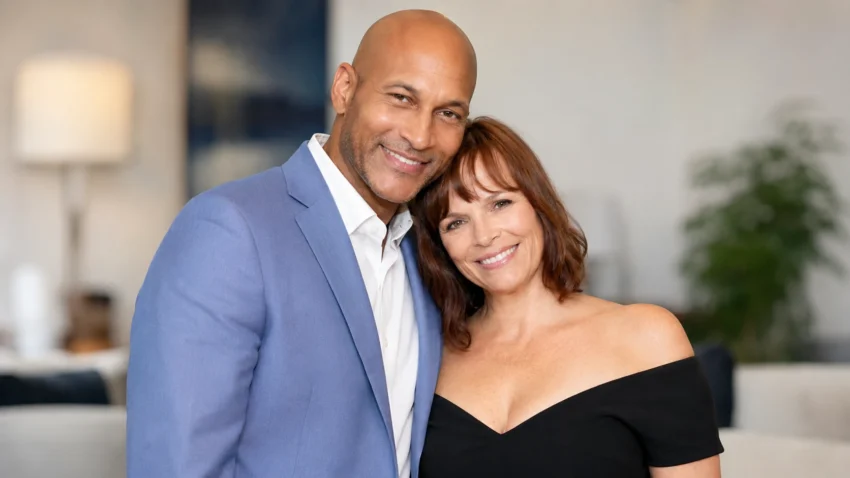
Cynthia Blaise is one of those entertainment professionals whose name carries more than one meaning, depending on who is searching. To some readers, she is the former wife of actor and comedian Keegan-Michael Key. To others, especially people interested in film craft, she is an actress, voice teacher, and dialect coach whose work has supported performers from behind the scenes.
Her story is not a typical Hollywood fame story. Blaise has appeared on screen, including in Star Trek V: The Final Frontier, but much of her career has been built in quieter rooms: rehearsal spaces, classrooms, sets, and coaching sessions where actors learn how to sound like someone other than themselves. That kind of work rarely creates tabloid celebrity, but it can shape the believability of a performance.
What makes Cynthia Blaise interesting is the contrast between her private public image and the very public attention that came through her marriage and divorce. She has a professional identity of her own, rooted in acting and voice work, yet most casual searches about her are tied to Keegan-Michael Key. A fair biography has to hold both truths at once.
Early Life and Background
Public information about Cynthia Blaise’s early life is limited. She is generally listed as having been born on January 12, 1958, though details about her parents, siblings, hometown, and childhood have not been widely documented in reliable public sources. That lack of detail is important because many short online profiles repeat claims without showing where they came from.
What is clear is that Blaise pursued serious dramatic training before building her career. She studied acting at the graduate level and earned an M.F.A. from the University of California, Irvine, according to publicly available professional listings. That training helps explain the shape of her later work, which combined performance, speech, coaching, and teaching.
Unlike performers who build early careers through publicity, Blaise appears to have taken a craft-first path. Her public record does not show a childhood shaped by celebrity connections or early fame. Instead, it points toward someone who studied acting deeply and later applied that training in several corners of the entertainment world.
Education and Acting Training
Cynthia Blaise’s education is central to understanding her career. An M.F.A. in acting is not casual training; it usually involves demanding work in scene study, movement, voice, speech, stage technique, and text analysis. For someone who later became known as a dialect coach, that foundation makes sense.
The University of California, Irvine has long had a respected theatre program. A graduate acting education gives performers the tools not just to act, but also to understand how actors prepare. That knowledge can become especially valuable for coaches who need to help other performers build convincing characters.
Blaise’s later work suggests she was drawn to the technical side of performance as much as the visible side. Voice and dialect coaching require careful listening, physical awareness, and the ability to translate sound into repeatable practice. Those are not skills that appear overnight; they are built through years of training and repeated professional use.
First Screen Credits and Acting Work
Cynthia Blaise is often identified as an actress, though her acting credits are relatively selective. Her most recognized screen appearance came in Star Trek V: The Final Frontier, released in 1989. In the film, she appeared as young Amanda Grayson, the human mother of Spock.
That role was brief, but it has remained part of her public identity because of the lasting reach of the Star Trek franchise. Even minor appearances in that universe can remain searchable for decades because fans pay close attention to character history and continuity. For Blaise, the credit became one of the most durable public markers of her acting career.
She has also been associated with projects including Timequest, Robot Chicken, and Key & Peele. These credits show that she did appear across different kinds of screen work, though she did not pursue the kind of high-volume acting career that leads to constant public visibility. Her career instead moved between performance, instruction, and specialized coaching.
Work as a Dialect Coach
Cynthia Blaise’s most meaningful professional contribution may be her work as a dialect coach. A dialect coach helps actors adjust speech patterns, accents, rhythm, pronunciation, and vocal habits to fit a character. The job is both technical and artistic because it has to serve the story without distracting from it.
Good dialect coaching is usually invisible. If the actor sounds natural, the audience believes the character and moves on. If the accent sounds forced, viewers may remember the mistake more than the scene.
Blaise has been connected to dialect and voice work on film and television productions, including projects such as Bad Teacher, The Five-Year Engagement, Touch, and American Horror Story. These credits place her in a professional category that is often overlooked by casual audiences. Actors may receive the applause, but coaches help create the conditions that make performances believable.
Teaching and Voice Work
Blaise’s career has also included teaching and speech work. That side of her professional life fits naturally with her acting background. Many voice and speech teachers come from theatre training, where clarity, breath, sound, and presence are treated as essential parts of the actor’s instrument.
Her work has been described through professional profiles connected to dialect and performance education. These listings have associated her with teaching, conference workshops, and stage direction. That range suggests a career shaped less by fame and more by sustained craft.
Teaching performance is different from simply performing. A teacher has to diagnose what an actor is doing, explain what needs to change, and offer practical exercises that can be repeated under pressure. Blaise’s path shows a professional who seems to have understood performance from both sides of the room.
Marriage to Keegan-Michael Key
Cynthia Blaise married Keegan-Michael Key on December 27, 1998. At the time, Key was not yet the global comedy name he would later become. Their marriage began years before Key & Peele made him one of the most recognizable sketch performers in American television.
That timeline is important because Blaise was part of Key’s life during a long stretch of career growth. Before the major fame, there were years of theatre, comedy, auditions, and professional uncertainty. Their marriage lasted through the period when Key moved from a working performer to a widely known television and film figure.
The couple separated in 2015, and their divorce was finalized in 2017. They did not have children together, according to public reporting on the divorce. After the split, Key later married producer and director Elisa Pugliese.
Divorce and Public Attention
The divorce brought Cynthia Blaise more public attention than her acting or coaching work ever had. Media coverage focused heavily on the settlement because the reported support terms were large. That attention changed how many people encountered her name online.
Reports at the time stated that Key was ordered to pay monthly spousal support, along with additional income-based support under certain conditions. Some coverage also described asset division and financial terms connected to the divorce. Those details became widely repeated, but they should be understood as part of a legal and financial story rather than a full portrait of Blaise’s life.
Public divorce coverage often flattens people into numbers, dates, and headlines. In Blaise’s case, that risk is especially clear because her own professional history is more layered than the divorce coverage suggests. Her marriage to Key is part of her biography, but it is not the whole biography.
Cynthia Blaise’s Net Worth and Income Sources
There is no verified public net worth for Cynthia Blaise. Many entertainment websites publish estimated figures, but those numbers are often unsourced and should not be treated as confirmed. For a private figure with teaching, coaching, acting, and divorce settlement income, any exact figure would require documentation that is not publicly available.
Her likely income sources over the years include acting work, dialect coaching, teaching, and voice-related professional services. The reported divorce settlement also formed part of the public financial story. Still, income and net worth are not the same thing, and support terms from a divorce do not reveal a person’s full financial position.
A responsible estimate would have to remain cautious. Cynthia Blaise appears to have had a long professional career and significant reported financial support after her divorce. But her current assets, investments, property, and ongoing earnings are private.
Public Image and Privacy
Cynthia Blaise has maintained a relatively private public image. She is not known for regular interviews, public commentary, or a highly visible social media presence. That privacy has left room for speculation, but it has also protected parts of her life from the entertainment cycle.
Her public identity rests on three main areas: her acting credits, her dialect and teaching work, and her former marriage to Keegan-Michael Key. The first two speak to her professional abilities. The third explains why her name appears so often in celebrity searches.
There is a difference between being publicly searchable and actively seeking fame. Blaise seems to belong to the first category more than the second. Her record shows a working entertainment professional, not a celebrity personality trying to remain in the news.
Where Cynthia Blaise Is Now
Cynthia Blaise’s current life is not heavily covered in the media. Public professional listings have continued to identify her with voice, speech, acting, and dialect coaching. There is no widely confirmed recent public project that has placed her back in mainstream entertainment headlines.
That does not mean she is inactive. Many coaches, teachers, and theatre professionals work consistently without appearing in celebrity press. Their work may happen through private coaching, academic settings, production work, or smaller creative projects.
What can be said with confidence is that Blaise has not built her later public profile around fame. She remains a figure of interest because of her professional background and past marriage, but she appears to keep her personal life largely out of public view. That choice deserves respect, especially for someone whose career has often centered on helping other performers be seen and heard.
Legacy and Industry Standing
Cynthia Blaise’s career is a reminder that not every meaningful entertainment life is measured by starring roles. Acting credits matter, but so do the people who help actors prepare, speak, listen, and inhabit characters. Dialect coaches and voice teachers often leave their mark through other people’s performances.
Her work also reflects a practical truth about the performing arts. Many artists build careers across several roles rather than following a single path. Blaise has been an actor, teacher, coach, and director, which suggests adaptability and deep knowledge of performance craft.
For readers who only know her through Keegan-Michael Key, her biography offers a fuller view. She was not simply attached to a famous name. She built her own career in the demanding, detail-oriented world of acting and speech.
Frequently Asked Questions
Who is Cynthia Blaise?
Cynthia Blaise is an American actress, voice and speech teacher, and dialect coach. She is known for her appearance in Star Trek V: The Final Frontier and for her professional work helping actors with speech and dialect. She is also widely known as the former wife of Keegan-Michael Key.
How old is Cynthia Blaise?
Cynthia Blaise is commonly listed as having been born on January 12, 1958. Based on that date, she turned 68 in January 2026. Her early family background and private childhood details are not widely confirmed in public sources.
What is Cynthia Blaise famous for?
She is best known publicly for two reasons. One is her entertainment work, especially her role as young Amanda Grayson in Star Trek V: The Final Frontier and her work as a dialect coach. The other is her former marriage to actor and comedian Keegan-Michael Key.
Was Cynthia Blaise married to Keegan-Michael Key?
Yes, Cynthia Blaise was married to Keegan-Michael Key. They married on December 27, 1998, separated in 2015, and finalized their divorce in 2017. They did not have children together, according to public reports.
What does Cynthia Blaise do for a living?
Cynthia Blaise has worked as an actress, dialect coach, voice and speech teacher, and theatre professional. Her coaching work has connected her to film and television productions where actors needed help with accents and speech patterns. This kind of work is often done behind the scenes but can strongly affect the final performance.
What is Cynthia Blaise’s net worth?
Cynthia Blaise’s net worth has not been verified through reliable public financial records. Some sites offer estimates, but those figures should be treated with caution. Her income history likely includes acting, teaching, dialect coaching, and reported divorce settlement support.
Is Cynthia Blaise still active in Hollywood?
There is limited recent public information about Cynthia Blaise’s current projects. Professional listings have continued to connect her with voice, speech, and dialect coaching. She appears to keep a low public profile, so her current work may not be widely reported.
Conclusion
Cynthia Blaise’s life story sits at the intersection of public curiosity and private craft. She has been connected to a famous marriage, but her own career reaches beyond that headline. Her work as an actor, teacher, and dialect coach shows a person who understood performance as both art and discipline.
The most interesting part of her biography may be the part least suited to gossip. Blaise’s professional world is one where careful listening matters, where a small shift in sound can change how a character feels. That is not always visible to the audience, but it is central to the work of film, television, and theatre.
Her public profile remains quiet today, and that seems consistent with the rest of her career. Cynthia Blaise does not appear to have chased celebrity, even when celebrity coverage found her. What remains is a grounded portrait of a trained performer and coach whose influence is best understood through craft, not noise.