
The question doesn’t belong to a person, but it behaves like one. It shows up in search bars late at night, in dealership conversations, and in online forums where new electric vehicle owners compare notes. “Do the driving modes in Cadillac LYRIQ offer different ranges or battery usages?” looks like a technical query, but it reflects something more human: curiosity mixed with anxiety about how a high-end electric SUV actually behaves once it leaves the showroom.
In many ways, this question has a life story of its own. It was born alongside the modern EV era, shaped by shifting expectations about range and efficiency, and sharpened by Cadillac’s attempt to merge luxury with electrification. To understand it properly, you have to follow how it developed, what it reveals about the LYRIQ itself, and why it continues to matter to drivers today.
The Origins of the Question
The rise of electric vehicles didn’t just change how cars are powered; it changed how people think about driving. For decades, gasoline drivers barely considered fuel consumption beyond a rough miles-per-gallon figure. EV drivers, by contrast, often watch their remaining range as closely as their speed. That shift created a new kind of awareness, and with it, new kinds of questions.
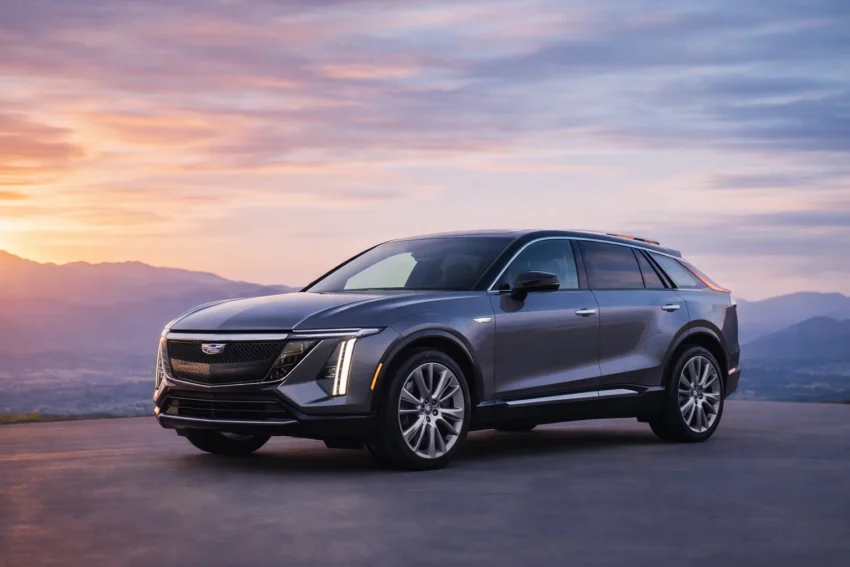
Cadillac entered this conversation with the LYRIQ, its first fully electric SUV built on General Motors’ Ultium platform. Introduced in 2022 for the 2023 model year, the LYRIQ arrived as both a statement and a test. It needed to prove that Cadillac could compete in a space dominated by Tesla and quickly expanding rivals. It also needed to reassure traditional luxury buyers that electric driving could feel familiar, intuitive, and refined.
From the start, Cadillac emphasized that the LYRIQ was designed to be approachable. Its interface, its ride quality, and its driving modes were all meant to feel natural rather than experimental. But the moment those modes appeared on the screen—Tour, Sport, Snow/Ice, and My Mode—drivers began asking what they actually meant for something that mattered deeply: range.
Understanding the LYRIQ’s Identity
To understand why this question persists, you have to understand the LYRIQ itself. The vehicle is powered by a battery pack rated at about 102 kWh, depending on configuration, and offers EPA-estimated ranges that vary by drivetrain. Rear-wheel-drive versions have been rated at up to 326 miles, while all-wheel-drive versions typically land slightly lower.
That range figure is the headline number, the one that shapes buying decisions. But it is also, by design, a controlled estimate based on standardized testing. It doesn’t account for how an individual driver behaves, how the weather shifts, or how the vehicle is configured moment to moment.
That’s where driving modes come in. They don’t change the battery’s size or chemistry, but they do change how the vehicle responds. And that subtle distinction is where confusion—and curiosity—begins.
What Driving Modes Actually Do
Cadillac’s driving modes are not unique in concept, but their implementation reflects the brand’s priorities. Tour mode is the default, designed for comfort and balance. It smooths throttle response, softens steering, and keeps the experience calm. Sport mode tightens everything, sharpening acceleration and steering feel. Snow/Ice mode reduces responsiveness to help maintain traction on slippery surfaces.
Then there’s My Mode, which allows drivers to customize these characteristics. It can be tuned to feel relaxed or aggressive, depending on the driver’s preference. In the high-performance LYRIQ-V, additional modes such as V-Mode and Velocity Max introduce even more aggressive power delivery.
Each of these modes changes how the vehicle behaves, but none of them changes the battery itself. The energy available remains constant. What shifts is how quickly that energy is used.
The Turning Point: Real-World Awareness
The question about range and modes gained traction as more LYRIQ vehicles reached customers and reviewers. Early road tests and owner reports began to highlight something familiar to seasoned EV drivers: real-world range is fluid. It moves with speed, temperature, terrain, and driving style.
Drivers noticed that switching to Sport mode didn’t instantly drop their range estimate, but driving more aggressively in that mode often did. Similarly, using Snow/Ice mode in winter conditions sometimes coincided with reduced range, though the real culprit was often cold weather and increased heating demands.
What’s surprising is how often the mode itself gets blamed for changes that have deeper causes. The mode sets the stage, but the driver’s behavior plays the lead role.
The Science Behind Battery Usage
At its core, the question is about energy consumption. Electric vehicles measure efficiency in kilowatt-hours per mile, and that figure changes based on how much power the vehicle draws. Rapid acceleration requires more energy than gentle acceleration. High speeds increase aerodynamic drag, which dramatically raises energy use.
Driving modes influence these factors indirectly. A sharper throttle response in Sport mode makes it easier to draw more power quickly. A softer response in Tour mode encourages smoother inputs. Snow/Ice mode limits power delivery to prevent wheel slip, which can actually reduce energy spikes but is usually used in conditions that are already less efficient.
The battery doesn’t care which mode is selected. It responds only to demand. But the mode shapes how that demand is created.
Public Perception and Misunderstandings
As the LYRIQ gained popularity, the question about driving modes and range became part of a broader conversation about EV behavior. Online forums and social media discussions often frame it in simple terms: “Does Sport mode reduce range?” The answer, in practice, is more nuanced than many expect.
Some drivers assume that each mode has a fixed range penalty or benefit, as if switching modes changes the vehicle’s efficiency rating in a measurable, predictable way. That assumption comes from years of thinking about fuel economy in static terms. EVs challenge that mindset by making efficiency more dynamic and visible.
The truth is that range is not a fixed outcome but a moving target. Driving modes influence it, but they do so through behavior, not through a direct mechanical change in the battery system.
The Role of Regenerative Braking
Another layer of the story involves regenerative braking, which often gets lumped into discussions about driving modes. The LYRIQ offers features like One-Pedal Driving and Regen on Demand, which allow the vehicle to recover energy during deceleration.
These features can improve efficiency in stop-and-go conditions, but they are separate from the driving modes themselves. They operate alongside them, not within them. A driver can use strong regenerative braking in either Tour or Sport mode, and the effect on energy recovery will depend more on driving conditions than on the selected mode.
This distinction matters because it highlights how many variables are at play. Range is not controlled by a single setting but by a network of systems working together.
Cadillac’s Position
Cadillac has been careful in how it presents the LYRIQ’s capabilities. Official materials focus on overall range figures and driving experience rather than promising specific efficiency gains from different modes. The owner’s manual emphasizes that range estimates are influenced by recent driving habits, climate use, and conditions.
That approach reflects a broader industry trend. Automakers avoid tying range claims to specific modes because the variables are too complex to guarantee consistent outcomes. Instead, they frame modes as tools for shaping the driving experience.
For drivers, that means the responsibility for efficiency remains largely in their hands.
The Human Element
What gives this question its staying power is not just technical curiosity but human behavior. Drivers want control, and they want to understand how their choices affect outcomes. In an EV, that connection feels more immediate because the feedback is visible on the dashboard.
Switching modes feels like a decision that should have measurable consequences. Sometimes it does, but not always in a way that is easy to isolate. The interplay between mode, driving style, and external conditions creates a feedback loop that can be difficult to interpret.
That uncertainty keeps the question alive, even as the technology becomes more familiar.
Where the Question Stands Now
Today, the LYRIQ is established as a serious contender in the luxury EV market. It has earned praise for its ride quality, interior design, and overall refinement. The question about driving modes and range remains relevant, but it has shifted slightly in tone.
Early on, it was about understanding the basics. Now, it is more about optimization. Drivers who are comfortable with the vehicle want to know how to get the most out of it. They are less concerned with whether modes change range at all and more interested in how to use those modes effectively.
The answer has not changed, but the context has matured.
Frequently Asked Questions
Do the driving modes in Cadillac LYRIQ offer different ranges or battery usages?
The driving modes do not come with separate official range ratings, and they do not change the battery’s capacity. However, they can influence how quickly the battery is used by altering throttle response, traction behavior, and overall driving dynamics. The effect on range depends largely on how the driver responds to those changes.
Which driving mode is most efficient in the LYRIQ?
Tour mode is generally considered the most balanced and efficient for everyday driving. It encourages smoother inputs and avoids the aggressive responses found in Sport mode. That said, efficiency ultimately depends more on driving habits than on the selected mode.
Does Sport mode reduce battery range?
Sport mode can lead to higher energy consumption if it encourages faster acceleration and more dynamic driving. However, at steady speeds with gentle inputs, the difference in range compared to other modes may be minimal. The mode itself does not impose a fixed range penalty.
Is Snow/Ice mode better or worse for range?
Snow/Ice mode is designed for safety rather than efficiency. It reduces power delivery to improve traction, which can help in slippery conditions. However, it is typically used in cold weather, where range is already reduced due to temperature and heating demands.
Can My Mode improve efficiency?
My Mode allows drivers to customize the vehicle’s behavior, including acceleration and steering. If configured for a relaxed driving style, it can perform similarly to Tour mode in terms of efficiency. If set up for more aggressive responses, it may lead to higher energy use.
Do regenerative braking settings affect range more than driving modes?
In many cases, yes. Regenerative braking can recover energy during deceleration, especially in stop-and-go traffic. While driving modes influence how the vehicle responds, regenerative braking directly affects how much energy is returned to the battery.
Conclusion
The question about Cadillac LYRIQ driving modes and range is less about a single answer and more about understanding a system. It reflects the shift from static fuel economy to dynamic energy management, where driver behavior plays a central role. The modes themselves are tools, not determinants, shaping how the vehicle responds rather than dictating how far it can go.
What stands out is how this question mirrors the broader EV transition. Drivers are learning to think differently about efficiency, to see it as something they can influence rather than something fixed. The LYRIQ, with its blend of luxury and technology, becomes a platform for that learning.
In the end, the question persists because it matters. It speaks to the desire for clarity in a space that is still evolving, and to the human instinct to understand how choices translate into outcomes. The answer may not be as simple as some hope, but it is far more revealing.
The LYRIQ doesn’t just offer different driving modes. It offers a different way of thinking about driving itself.