
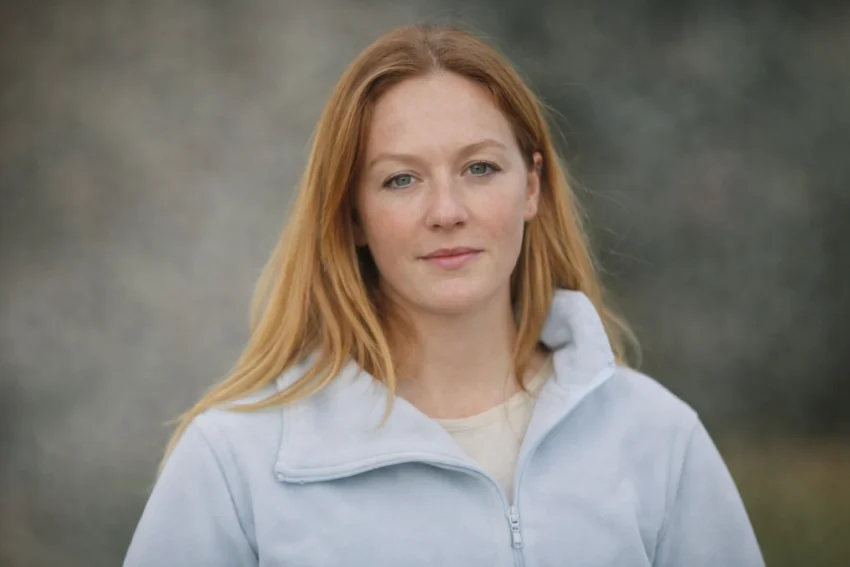
The truth is, Felicity Tonkin has spent most of her life doing something unusual in a world obsessed with visibility. She stepped away. While the public kept circling back to her story, she moved forward on her own terms, building a life in New Zealand that has remained largely out of reach of the press. That tension between curiosity and privacy sits at the center of her biography, and it shapes nearly every detail we can confirm about her.
Early Life and Family Background
Felicity Tonkin was born in August 1985 in New Zealand, a country far removed from the ceremonial rhythms and scrutiny of British royal life. Her mother, Heather Tonkin, raised her in a setting that, by all accounts, was grounded and private. There are no widely documented accounts of elite boarding schools or aristocratic upbringing. Instead, the available record points toward a childhood shaped by ordinary routines, far from palace gates or London tabloids.
Her father, Captain Mark Phillips, was already a public figure by the time she was born. He had won Olympic gold in equestrian eventing in 1972 and had married Princess Anne the following year. That connection placed him permanently in the orbit of royal attention, which meant that any personal matter tied to him could quickly become public. When Heather Tonkin asserted that Phillips was Felicity’s father, it didn’t stay a private claim for long.
What’s surprising is how early that attention arrived in Felicity’s life. Throughout the late 1980s, media coverage intensified as the paternity claim gained traction. By 1991, a DNA test confirmed that Mark Phillips was indeed her father, closing the legal chapter but opening a much longer public one. Felicity was six years old when that confirmation became headline news, an age when most children are just beginning to understand their place in the world.
Growing up in New Zealand likely provided some buffer from the British media storm, but it couldn’t erase the connection. She was, from that point on, linked to a family whose name carried global recognition. Yet her upbringing appears to have remained rooted in a different reality, one shaped more by local life than royal tradition.
The Story That Made Headlines
The paternity case that brought Felicity Tonkin into public view unfolded during a period when the British royal family was already under scrutiny. Mark Phillips and Princess Anne were still married when the claim emerged, and the situation added pressure to an already strained relationship. Media outlets at the time didn’t hold back, framing the story in stark terms that reflected both the era’s tone and its appetite for scandal.
By the early 1990s, the narrative had settled into a set of established facts. The DNA test confirmed paternity in 1991, and Princess Anne and Mark Phillips divorced in April 1992. For the public, these events became linked in memory, even though each had its own context and timeline. Felicity’s name remained tied to that chapter, often reduced to a footnote in broader royal coverage.
Here’s where it gets complicated. The story that defined her public identity was never really about her choices or actions. It was about adult relationships, legal proceedings, and media framing. Yet she carried the label long after the headlines faded. That imbalance, between cause and consequence, still shapes how her name appears in public discourse.
Not many people know this, but archival footage and reporting from that period show how intensely the story was covered. News broadcasts in both the United Kingdom and New Zealand followed the case closely, often revisiting it as new details emerged. For Felicity, those reports formed a kind of background noise to her early years, a narrative she didn’t control but couldn’t fully escape.
Growing Up Away from the Spotlight
As Felicity Tonkin moved into adolescence and adulthood, something unusual happened. The story didn’t follow her in the way many might expect. There were no high-profile interviews, no tell-all memoirs, and no attempts to claim a public role tied to her family name. Instead, she appears to have chosen distance, both geographically and socially, from the world that first brought her attention.
Anyone who studies public figures can tell you that this kind of restraint is rare. Many people connected to famous families eventually step into the spotlight, whether through media appearances, business ventures, or public advocacy. Felicity did not take that path. The available record suggests a consistent pattern of privacy, one that has held for decades.
That said, privacy doesn’t mean absence. Reports over the years have described her as living and working in New Zealand, maintaining a life that is largely separate from her father’s public career and her half-siblings’ visibility in British media. The lack of detailed documentation isn’t a gap to be filled with speculation. It’s part of the story itself.
There’s also a cultural difference worth considering. New Zealand’s public culture tends to be less celebrity-driven than Britain’s, with a stronger emphasis on personal space and community life. Growing up in that environment may have shaped Felicity’s approach to public attention, reinforcing a preference for staying out of the spotlight rather than engaging with it.
Career and Professional Life
Much of what is written about Felicity Tonkin’s career centers on a single claim: that she works as an equine veterinarian. The detail appears frequently in lifestyle and celebrity coverage, often presented as a natural extension of her father’s equestrian background. While the connection makes sense on the surface, it’s important to approach it with caution, as strong primary-source confirmation remains limited.
If the claim is accurate, it paints a picture of a demanding and specialized profession. Equine veterinarians work closely with horses, often in high-pressure situations that require both technical expertise and physical resilience. It’s not a field that attracts people seeking easy recognition. Instead, it draws those who are committed to hands-on work and long hours.
The truth is, even without full confirmation, the idea fits the broader pattern of her life. Felicity Tonkin has consistently been described as someone who values substance over visibility. A career rooted in practical skills and daily responsibility would align with that reputation, offering a sense of purpose far removed from the world of royal headlines.
What stands out most is not the specific job title but the absence of self-promotion. There are no widely circulated interviews about her work, no public profiles detailing her achievements, and no efforts to connect her professional identity to her family history. That separation suggests a clear boundary between who she is and how she first became known.
Family Connections and Personal Relationships
Felicity Tonkin’s family ties are often the first thing mentioned in any account of her life. She is the daughter of Mark Phillips and the half-sister of Peter Phillips and Zara Tindall, both of whom have been more visible in public life. Yet those connections, while biologically clear, don’t necessarily translate into shared experiences or close public relationships.
Peter Phillips and Zara Tindall were raised within the framework of the British royal family, even without formal titles. Their lives included public events, media coverage, and a degree of scrutiny that comes with proximity to the monarchy. Felicity’s upbringing in New Zealand placed her outside that environment, creating a different set of influences and expectations.
The truth is, there is very little publicly confirmed information about her personal relationships. Some reports suggest she has built a family life of her own, possibly including marriage and children, but these details remain largely unverified. That absence of confirmed information should not be mistaken for mystery or secrecy. It reflects a deliberate choice to keep personal matters out of public view.
By all accounts, that choice has been consistent over time. While her name continues to appear in articles about royal connections, Felicity herself has not engaged with those narratives in any visible way. Her relationships, whether familial or personal, remain defined more by privacy than by public display.
Financial Standing and Net Worth
Estimating Felicity Tonkin’s net worth is a challenging task, and that’s not unusual for someone who has not pursued a public career. Many online sources attach figures to her name, but these numbers often lack clear sourcing and should be treated with caution. Without confirmed details about her income, assets, or business activities, any estimate remains speculative.
What can be said with more confidence is that her financial standing is unlikely to be tied directly to royal wealth. Mark Phillips, despite his connection to Princess Anne, does not hold a royal title and has built his own career through equestrian sport and related ventures. Felicity’s life in New Zealand suggests a similar independence, shaped by her own work rather than inherited status.
Here’s where it gets interesting. In a culture that often equates visibility with success, Felicity Tonkin represents a different model. Her financial life, whatever its exact details, appears to be grounded in privacy and personal effort rather than public exposure. That approach may not generate headlines, but it offers a kind of stability that public figures rarely achieve.
The absence of confirmed awards or public honors reinforces this picture. Her story is not one of public accolades or widely recognized achievements. Instead, it reflects a quieter form of success, one measured by personal choices rather than external validation.
What She’s Doing Now
As of 2026, Felicity Tonkin remains largely out of the public eye. There have been no major interviews, public appearances, or official statements that would shift the narrative around her life. She continues to be referenced primarily in connection with her father and half-siblings, rather than through her own activities.
That said, the persistence of public interest suggests that her story still resonates. Each new mention of her name brings a wave of curiosity, often driven by the same questions that first appeared decades ago. Who is she now? What kind of life has she built? Why has she chosen to stay private?
The answers, to the extent they can be confirmed, point toward continuity rather than change. Felicity Tonkin appears to have maintained the same approach that has defined her adult life: a focus on personal work, a commitment to privacy, and a distance from the narratives that first brought her attention.
Anyone who expected a dramatic shift or a late entry into public life may find that surprising. But for those who have followed her story closely, it feels consistent. Her life has been shaped as much by what she has not done as by what she has.
Lesser-Known Aspects of Her Life
One detail that often gets overlooked is how early Felicity Tonkin’s story intersected with advances in DNA testing. In 1991, the confirmation of Mark Phillips’ paternity relied on technology that was still gaining public trust. That moment placed her at the center of a broader shift in how personal claims could be verified and contested.
Another aspect worth noting is the geographic distance that has defined her life. While her father’s career and public presence were centered in the United Kingdom, Felicity’s upbringing in New Zealand created a different cultural framework. That distance likely influenced how she experienced and responded to public attention.
What’s surprising is how consistently she has avoided the common paths associated with public figures. There are no records of endorsement deals, media partnerships, or attempts to capitalize on her story. That restraint stands out in an era where personal narratives are often turned into brands.
There’s also the question of identity. Being linked to a famous family can shape how others see you, but it doesn’t have to define how you see yourself. Felicity Tonkin’s life suggests a careful balance between acknowledging her background and building something separate from it.
Frequently Asked Questions
Who is Felicity Tonkin?
Felicity Tonkin is the daughter of Mark Phillips, a British Olympic equestrian, and Heather Tonkin. She became publicly known after a 1991 DNA test confirmed Phillips’ paternity. Since then, she has remained largely private, living in New Zealand and avoiding public attention.
Is Felicity Tonkin a member of the royal family?
No, she is not a member of the British royal family. While she is connected through her father’s former marriage to Princess Anne, she does not hold any royal title or official role. Her life has been separate from royal duties and public engagements.
What does Felicity Tonkin do for a living?
Many reports describe her as an equine veterinarian in New Zealand, though strong primary confirmation is limited. If accurate, the role reflects a practical and demanding profession that aligns with her low-profile lifestyle. She has not publicly discussed her career in detail.
Does Felicity Tonkin have a relationship with her half-siblings?
There is little publicly confirmed information about her relationship with Peter Phillips and Zara Tindall. While they share a father, their upbringing and life experiences have been very different. Any details about their personal interactions remain private.
Why is Felicity Tonkin still talked about today?
Her story continues to attract attention because of its connection to a well-known royal marriage and a widely reported paternity case. The contrast between public curiosity and her private life keeps interest alive. People often search for her expecting new details, but the core facts have remained largely unchanged.
Conclusion
Felicity Tonkin’s life doesn’t follow the script that many expect from someone linked to a famous family. There are no grand public statements, no attempts to reshape her narrative, and no visible push toward the spotlight. Instead, there is a steady commitment to living outside the frame that first brought her attention.
The truth is, her story is less about royalty and more about choice. She didn’t choose the circumstances that made her name public, but she has chosen how to respond to them. That response has been consistent, measured, and, in many ways, quietly powerful.
What’s surprising is how rare that kind of consistency has become. In a world where visibility often feels unavoidable, Felicity Tonkin has shown that it is still possible to step back and build a life on your own terms. That choice doesn’t erase the past, but it does shape the future in ways that headlines can’t fully capture.
If there’s a lesson in her biography, it’s not about fame or scandal. It’s about the space between them, and what a person can create when they decide that space belongs to them. That’s where her story continues, away from the noise, steady and largely unseen.