
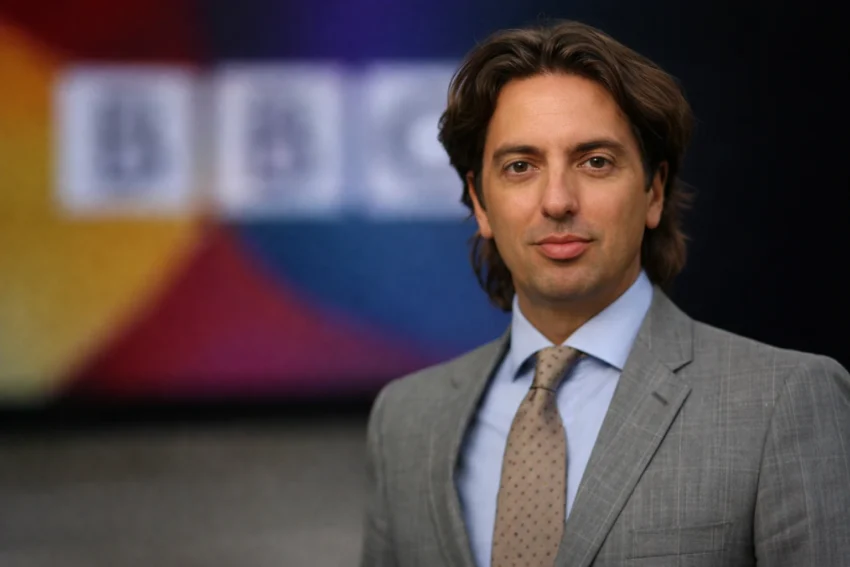
Kieran Clifton is not a household name in the usual sense. He doesn’t present television shows, appear on red carpets, or dominate headlines with personal drama. Yet his work shapes something far more widespread: how millions of people in the UK access television every day. As a senior BBC executive responsible for distribution and business development, Clifton sits at the point where public broadcasting meets modern technology.
That might sound technical, but it has real-world consequences. Whether viewers can easily find BBC channels on a smart TV, whether free-to-air television remains accessible in a streaming age, and how platforms like Freely take shape — these are the kinds of decisions tied to roles like his. And while his name surfaces occasionally in industry news or corporate announcements, the story behind it is far more layered than most quick searches suggest.
Early Life and Background
Public information about Kieran Clifton’s early life is limited, which is not unusual for someone who has built a career largely behind the scenes. Unlike entertainers or politicians, media executives often operate outside the spotlight, and Clifton appears to have maintained that distance consistently.
What can be inferred is that his career path points to a strong academic and strategic foundation. Many profiles suggest a background in elite education and business training, though detailed confirmation of specific institutions should be treated carefully unless supported by primary sources. Still, his later trajectory — moving into high-level strategic roles in broadcasting — suggests early preparation in analytical thinking and media economics.
That absence of personal detail has, in some ways, defined how he is perceived publicly. Clifton is not known through biography or personality, but through the systems he helps build. The focus, then, shifts quickly from who he is privately to what he does professionally.
Entering the Media Industry
Before joining the BBC, Clifton is widely reported to have worked at Channel 5, one of the UK’s major broadcasters. During that period, he is said to have held roles in strategy, eventually rising to a senior position focused on long-term planning and development. While exact titles and dates should be verified carefully, the general outline is consistent across multiple industry profiles.
This stage of his career matters because it places him firmly within the commercial side of UK broadcasting before moving into the public-service environment of the BBC. That distinction is important. Commercial broadcasters operate under different pressures — advertising revenue, audience share, and competition — while the BBC carries a public mandate alongside its programming goals.
Clifton’s early experience appears to have given him a working understanding of both sides. But here’s the thing: that dual perspective becomes especially valuable later, when the boundaries between public and commercial media begin to blur in the digital age.
Joining the BBC and Moving Up
Kieran Clifton joined the BBC around 2010, stepping into a role that aligned closely with strategy and distribution. Over time, he moved into increasingly senior positions, eventually becoming Director of Distribution and Business Development — a title that reflects both responsibility and influence.
The job itself is not always easy to explain in a sentence. Distribution, in this context, refers to how BBC content reaches audiences across platforms. That includes traditional broadcasting through Freeview and satellite, but also newer channels like smart TVs, apps, and streaming services. Business development adds another layer, involving partnerships, negotiations, and long-term planning.
By the mid-2010s, Clifton had become a key figure in this space. His name appears in the BBC’s 2016–2017 annual report, where his salary band was listed among senior executives earning between £150,000 and £199,999. That disclosure, required as part of transparency measures, placed him firmly within the BBC’s leadership tier.
What’s interesting is that even at that level, Clifton remained relatively low-profile. He was not a public-facing spokesperson in the way some executives are. Instead, his influence showed up in infrastructure decisions — the kind that viewers rarely think about until something changes.
The Changing Nature of Television
To understand Clifton’s role, it helps to understand the moment he has been working through. Television in the UK has been undergoing a quiet but steady transformation. Traditional broadcast methods, once dominant, now share space with streaming platforms, on-demand viewing, and internet-based delivery.
For public-service broadcasters like the BBC, this shift raises a practical question: how do you stay visible and accessible when viewers no longer rely on a single device or signal? The answer isn’t just about content. It’s about distribution — making sure that content is easy to find, easy to access, and not buried under layers of competing platforms.
Clifton’s work sits right at the center of that challenge. His responsibilities involve ensuring that BBC services remain prominent on devices, negotiating carriage agreements, and exploring new delivery models. That might not grab headlines, but it shapes the everyday experience of watching television.
Freeview, Freesat, and Industry Partnerships
Part of Clifton’s influence extends beyond the BBC itself. He has been associated with organizations that manage the UK’s shared television infrastructure, including Freeview and Freesat. These platforms have long provided free access to television channels without subscription fees, forming a core part of the UK’s media landscape.
Clifton has served on boards linked to these systems, including entities connected to Digital UK and multiplex operators. These roles place him within a network of decision-makers responsible for maintaining and evolving the country’s broadcast infrastructure.
That said, these positions are not ceremonial. They involve coordination between broadcasters, regulators, and technology providers. Decisions made at this level affect coverage, signal quality, and the long-term viability of free-to-air television.
There’s a catch, though. As viewing habits shift toward streaming, these traditional systems face pressure. Maintaining them while also investing in digital delivery requires careful balance. That tension has defined much of the work Clifton has been involved in over the past decade.
Freely and the Push Toward Streaming
One of the clearest examples of that shift is the launch of Freely, a streaming service backed by UK public broadcasters. Freely represents an attempt to bring free television into the internet age, allowing viewers to access live channels and on-demand content without relying on aerial or satellite signals.
Clifton has been publicly linked to this project through his role at the BBC and his involvement with Everyone TV, the organization behind Freely. In official statements, he described the service as a major step forward for UK television, highlighting its potential to combine the accessibility of free TV with the flexibility of streaming.
Here’s where it gets interesting. Freely is not just a new product; it’s a response to competition from global streaming giants. Platforms like Netflix and Amazon have reshaped viewer expectations, and public broadcasters have had to adapt quickly.
Clifton’s role in this process reflects a broader strategy. Rather than abandoning traditional models entirely, the goal has been to evolve them. Freely sits at that intersection — a service rooted in public broadcasting but delivered through modern technology.
Influence Behind the Scenes
Despite his senior position, Clifton has remained largely out of the public eye. He does not maintain a high-profile media presence, and interviews or personal statements are relatively rare. Instead, his visibility comes through official announcements, industry coverage, and corporate filings.
This kind of profile is not unusual for executives in his field. The work is complex, often collaborative, and focused on systems rather than individuals. But it also means that public understanding of figures like Clifton tends to lag behind their actual influence.
The truth is, decisions made in distribution and platform strategy can shape the entire media ecosystem. They determine which services are prioritized, how content is presented, and how easily audiences can navigate choices. Clifton’s role places him within that decision-making process.
Personal Life and Public Interest
While Kieran Clifton is not a celebrity in his own right, public interest in his personal life has been influenced by his marriage to Marina Hyde, a well-known journalist and columnist. Hyde has written extensively for major UK publications and is recognized for her sharp commentary on politics, media, and culture.
The couple married in 1999, and while they have children, details about their family life are kept largely private. This discretion is consistent with Clifton’s overall approach to public visibility. Unlike some high-profile partnerships, theirs does not play out in interviews or social media.
That said, the connection does draw attention. Readers who encounter Clifton’s name often arrive via Hyde’s public profile, looking to understand the link. The answer is straightforward, but it doesn’t define his career. His professional identity stands on its own, separate from his spouse’s public presence.
Financial Standing and Salary
Information about Kieran Clifton’s finances is limited and should be approached with caution. The most concrete data comes from the BBC’s public salary disclosures, which placed him in a high-earning bracket during the 2016–2017 period.
Beyond that, estimates of net worth vary widely and are often based on speculation rather than verified data. As a senior BBC executive, Clifton is likely well compensated, but exact figures are not publicly confirmed.
What can be said is that his position reflects a high level of responsibility within one of the UK’s most prominent institutions. Salary, in this case, is less about public curiosity and more about understanding the scale of the role.
Recent Activity and Current Role
As of 2026, Clifton continues to be associated with the BBC’s distribution strategy and with initiatives like Freely. The ongoing transition from broadcast to digital delivery remains a central issue for the industry, and his work sits squarely within that shift.
Recent developments in smart TV platforms, streaming integration, and regulatory discussions about prominence all intersect with his responsibilities. These are not isolated changes. They are part of a broader effort to ensure that public-service broadcasting remains accessible in a crowded media environment.
Not everyone agrees on the best path forward. Some argue that traditional systems should be phased out more quickly, while others stress the importance of maintaining free access for all audiences. Clifton’s role involves navigating these competing priorities.
Frequently Asked Questions
Who is Kieran Clifton?
Kieran Clifton is a British media executive best known for his role at the BBC as Director of Distribution and Business Development. His work focuses on how BBC content is delivered across various platforms, including traditional broadcasting and digital services. While not widely known to the general public, he plays an important role in shaping how audiences access television. His influence is felt more through systems than through public appearances.
What does Kieran Clifton do at the BBC?
Clifton is responsible for overseeing the distribution of BBC services and developing partnerships that support the organization’s reach. This includes negotiating with platform providers, ensuring visibility on devices, and exploring new delivery models. His role also involves long-term planning, especially as viewing habits shift toward streaming. In simple terms, he helps make sure BBC content is easy to find and access.
Is Kieran Clifton married to Marina Hyde?
Yes, Kieran Clifton is married to Marina Hyde, a well-known British journalist and columnist. They married in 1999 and have maintained a relatively private family life. While Hyde has a strong public presence, Clifton tends to remain out of the spotlight. Their relationship is occasionally mentioned in media profiles but is not central to his professional identity.
What is Kieran Clifton’s role in Freely?
Clifton has been involved in the development and launch of Freely through his work with the BBC and his connection to Everyone TV. Freely is a streaming service designed to deliver free-to-air television over the internet. His role reflects a broader strategy to adapt public broadcasting to modern viewing habits. It highlights his focus on distribution and future-facing platforms.
How much does Kieran Clifton earn?
Exact current salary figures are not publicly available. However, BBC disclosures from 2016–2017 placed him in a salary band between £150,000 and £199,999. This indicates a senior executive position within the organization. More recent figures have not been confirmed, and estimates should be treated carefully.
Conclusion
Kieran Clifton’s career is a reminder that influence in media does not always come with visibility. He operates in a part of the industry that most viewers rarely think about, yet his work affects how television is experienced every day. From broadcast signals to streaming platforms, the systems he helps shape form the backbone of modern viewing.
What stands out is the consistency of his focus. Rather than chasing public recognition, Clifton has built a career around infrastructure, strategy, and long-term planning. That approach has positioned him at the center of one of the biggest shifts in media history — the move from traditional broadcasting to digital delivery.
The future of television in the UK is still being written, and the outcome is far from certain. Questions about access, competition, and public-service values continue to shape the conversation. Clifton’s role ensures that he remains part of that discussion, even if his name stays out of the spotlight.
Looking ahead, the challenge will be maintaining the balance between innovation and accessibility. Free television has long been a defining feature of the UK media landscape, and preserving that principle in a changing environment is no small task. If Clifton’s career so far is any indication, he will continue to work at that intersection, shaping decisions that most viewers will never see — but will always feel.