
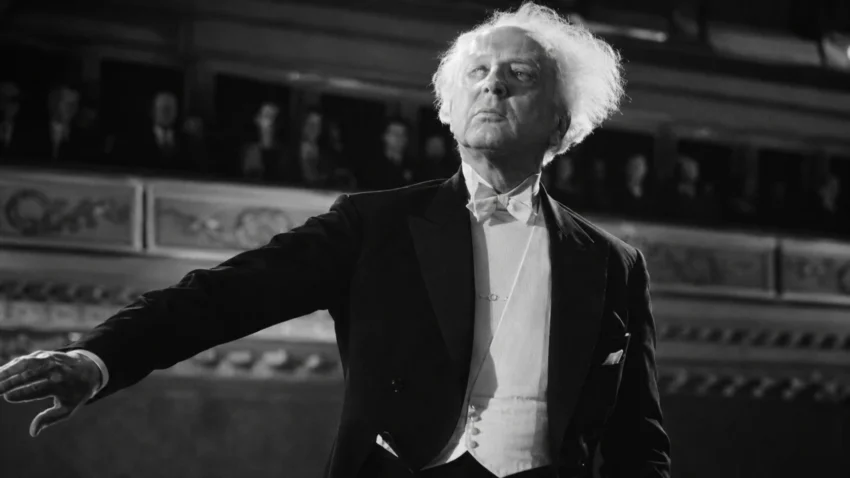
Leopold Stanislaus Stokowski was born into a family where privacy was almost impossible and attention arrived before choice. His mother was Gloria Vanderbilt, the heiress, artist, writer, fashion designer, and lifelong subject of public fascination. His father was Leopold Anthony Stokowski, one of the most famous conductors of the twentieth century, known to millions beyond the concert hall through Walt Disney’s Fantasia. Yet the son who inherited both names chose a quieter path, becoming known less for public achievement than for the striking decision to live outside the machinery of fame.
That contrast is what makes Leopold Stanislaus Stokowski, often called Stan Stokowski, so interesting to readers today. He is part of the Vanderbilt family story, the Stokowski musical legacy, and the personal history of Anderson Cooper, his younger maternal half-brother. But he is not a celebrity in the usual sense, and he has not spent his adult life explaining himself in interviews or turning family history into a public brand. His biography has to be written with care, because the real story is not one of constant headlines but of a man shaped by famous parents who appears to have valued ordinary privacy.
Early Life and Family Background
Leopold Stanislaus Stokowski was born on August 22, 1950, the first child of Gloria Vanderbilt and Leopold Anthony Stokowski. His birth placed him at the meeting point of two unusually visible American stories: the old-money Vanderbilt dynasty and the modern celebrity of a conductor who had become a popular cultural figure. His parents had married in April 1945, when Vanderbilt was still a young woman rebuilding her life after an early and unhappy marriage to Pat DiCicco. By the time Stan was born, both parents already carried public histories that would have been difficult for any child to escape.
Gloria Vanderbilt was not merely rich or socially known; she had been famous since childhood. In the 1930s, she became the subject of a sensational custody battle between her mother, Gloria Morgan Vanderbilt, and her aunt, Gertrude Vanderbilt Whitney. Newspapers covered the case heavily, turning a young girl’s family life into public entertainment. That early exposure helped define Vanderbilt’s lifelong relationship with attention, and it formed part of the emotional inheritance passed down to her children.
Stan’s father, Leopold Stokowski, came from a different world but was no less recognizable. Born in London in 1882, he became one of the most influential conductors of his generation, leading major orchestras and developing a reputation for theatrical presence and rich orchestral sound. His work with the Philadelphia Orchestra made him a central figure in American classical music. His appearance in Fantasia in 1940 gave him a place in popular culture that few conductors have ever reached.
Stan was followed by a younger brother, Christopher Stokowski, born on January 31, 1952. The two boys were the only children of the Vanderbilt-Stokowski marriage, which ended in divorce after about a decade. Their early family life unfolded against a background of wealth, artistry, divorce, custody pressure, and public curiosity. For Stan, the facts of birth were enough to make him a public figure on paper, even though he later moved in the opposite direction.
Growing Up Between Vanderbilt and Stokowski
The Vanderbilt name carried glamour, but it also carried weight. Gloria Vanderbilt’s childhood had shown how quickly family money could turn private pain into public spectacle. By the time she became a mother, she had already lived through courtrooms, headlines, difficult relationships, and the burden of being treated as a symbol rather than a person. Stan grew up close to that history, though he did not later become one of its most public narrators.
The Stokowski side of the family offered a different legacy: music, discipline, and international cultural standing. Leopold Stokowski was much older than Gloria Vanderbilt, and his professional life was built on intensity, travel, and artistic authority. He was not simply a famous musician but a figure whose name carried influence in orchestras, recordings, and film. For a child, that meant living in the shadow of a father whose identity was already fixed in public imagination.
The marriage between Vanderbilt and Stokowski did not last, and the separation brought its own strain. Public accounts have described custody conflict after the divorce, with Vanderbilt ultimately raising her sons. That chapter fits a larger pattern in her life, where motherhood, love, and legal conflict often overlapped in painful ways. Stan and Christopher were children inside those events, not authors of them, which is why responsible biography should avoid turning their early years into melodrama.
What can be said with confidence is that Stan’s upbringing was far from ordinary. He belonged to a household connected to concert halls, art galleries, writers, designers, wealth, and tabloid attention. Yet there is little public evidence that he sought to trade on that world as an adult. If anything, his later choices suggest a person who understood fame from the inside and decided it was not a life he needed to perform.
Gloria Vanderbilt as Mother

Gloria Vanderbilt as Mother
Gloria Vanderbilt had four sons across two marriages: Stan and Christopher Stokowski with Leopold Stokowski, then Carter Vanderbilt Cooper and Anderson Cooper with her fourth husband, Wyatt Cooper. The shape of that family matters because it explains why Stan’s name appears so often in searches about Anderson Cooper and the Vanderbilt line. To the public, Vanderbilt was an heiress and style figure, but to her sons she was also a complicated, creative, wounded, and devoted mother. Her life was marked by loss, work, romance, reinvention, and a constant struggle to define herself beyond inheritance.
Vanderbilt spoke and wrote often about memory, family, and identity, especially later in life. Her public relationship with Anderson Cooper became especially visible through their book The Rainbow Comes and Goes and the HBO documentary Nothing Left Unsaid. Those projects brought renewed attention to the Vanderbilt family, but they focused mainly on the bond between mother and youngest son. Stan was part of the family history, but he did not become the central voice in that public retelling.
That silence should not be mistaken for absence. Many private family members remain outside documentaries and interviews by choice, and Stan appears to have belonged to that category. He was present in the family story without seeking to own it in public. That distinction is important because it separates the person from the mythology around the surname.
Gloria Vanderbilt died on June 17, 2019, at age 95. Her death led to a renewed wave of coverage about her marriages, children, estate, art, fashion career, and lifelong fame. Stan’s name resurfaced in that coverage because he was her eldest child and because of later reporting about her will. For many readers, that was the first time they encountered him as more than a passing name in the Vanderbilt genealogy.
The Stokowski Legacy
Leopold Anthony Stokowski’s legacy is one of the most public elements of Stan’s background. The elder Stokowski was known for reshaping orchestral sound, popularizing symphonic music, and embracing media at a time when many classical figures treated mass culture with caution. He conducted without a baton, cultivated a dramatic image, and became associated with a lush sound that listeners could identify even outside formal musical training. His career gave the Stokowski name a cultural force separate from the Vanderbilt name.
Fantasia remains the most widely recognized part of that legacy for general audiences. In the film, Stokowski appeared with Walt Disney and conducted music that introduced many viewers to classical works through animation. The project made him familiar to people who might never have attended a symphony concert. For Stan, being the son of that man meant carrying a name attached not only to family but to artistic history.
There is no strong public record showing that Stan tried to build a career in music. That fact is easy to overlook because many readers assume children of celebrated artists follow the family profession. In Stan’s case, public references point instead toward gardening, horticulture, and a life connected to homes, landscapes, and private work rather than performance. The absence of a music career is not a failure of inheritance; it is evidence that family legacy does not dictate personal direction.
This is one of the quiet themes of his life. He belonged to a family where achievement was visible, branded, and discussed, yet his own path seems to have been measured in a different way. He did not need to become another conductor to be part of the Stokowski line. He also did not need to become another public figure to remain part of the Vanderbilt story.
Work, Gardening, and a Life Outside Show Business
Public reporting about Stan Stokowski’s adult work is limited, but the available accounts point in a consistent direction. He has been described as having worked in gardening-related businesses in New England and New York. Local coverage has also described him as a gardener with a background in ornamental horticulture. Those details are modest compared with the more dramatic biographies around him, but they are also revealing.
Gardening is a telling profession for someone born into spectacle. It is practical, seasonal, and physical, built around patience rather than applause. Ornamental horticulture requires design sense, knowledge of plants, and long attention to growth over time. In a family associated with ballrooms, courtrooms, fashion campaigns, orchestras, and television studios, that kind of work suggests a very different relationship to achievement.
Reports have connected Stan with Sag Harbor and the East End of Long Island, an area long associated with artists, writers, old families, and private wealth. That setting fits the known outline of his adult life: close enough to cultural circles to understand them, but far from the daily appetite of national celebrity media. His work appears to have been rooted in private clients and physical spaces rather than fame-facing projects. That may be why so little about his career appears in major profiles.
Readers looking for a long list of awards, companies, or public milestones may find the record frustrating. But the absence of public branding is itself part of the biography. Stan Stokowski seems to have made a life in which the family name was not the main product. That decision may be the most important adult fact about him.
Marriage, Children, and Family Life
Stan Stokowski’s personal life has been reported only in limited terms, and that limitation should be respected. Public accounts identify him as having been married to Ivy Strick and later to Emily Goldstein. Goldstein has been associated with the art world, including gallery and advisory work. Together, the available details suggest a social world tied more to art, gardens, and private East Coast circles than to entertainment publicity.
Stan has also been reported to have two daughters, Aurora and Abra. They are part of the extended Vanderbilt-Stokowski-Cooper family, but they have not become public figures on the scale of their grandmother or uncle Anderson Cooper. Because they are private people, responsible writing should avoid turning sparse public references into broad personal claims. Their names matter mainly because readers often want to understand the family tree.
The wider family includes Stan’s brother Christopher and half-brothers Carter Vanderbilt Cooper and Anderson Cooper. Carter died by suicide in 1988 at age 23, a devastating event that Gloria Vanderbilt and Anderson Cooper later discussed publicly. Christopher Stokowski became known in later reporting for a long estrangement from his mother and family, followed by a reported reconciliation with Anderson. Stan’s own family relationships have not been public in the same detailed way.
This is where biography has to resist the pressure to dramatize. It would be easy to use the Vanderbilt name as permission to turn every relationship into a public storyline. But Stan’s life shows the opposite: some people remain adjacent to fame without surrendering every private bond to public interpretation. The known facts are enough to place him within the family, but not enough to claim access to his inner life.
Connection to Anderson Cooper
For many modern readers, Stan Stokowski is most recognizable because of Anderson Cooper. Cooper, born in 1967, is Gloria Vanderbilt’s youngest son and one of the best-known television journalists in the United States. That makes Stan his older maternal half-brother by seventeen years. The age gap alone means they belonged to different chapters of Vanderbilt’s life.
Anderson Cooper’s public career has drawn renewed interest to the family. Through his journalism, books, interviews, and documentaries, he has spoken openly about grief, inheritance, motherhood, and the burden of famous family history. His work with Vanderbilt near the end of her life gave audiences a rare view of their relationship. Stan, by contrast, remained largely outside that public conversation.
That difference has sometimes led readers to wonder whether Stan was estranged from the family or simply private. The public record does not support broad claims about deep estrangement in his case. He has appeared in family-related coverage, and he was part of the estate reporting after Vanderbilt’s death. What is fair to say is that Anderson became the public interpreter of Vanderbilt family history, while Stan did not.
The brothers’ different public roles also reflect different temperaments and careers. Cooper works in television, where public trust and personal visibility are part of the job. Stan worked outside mass media and appears to have lived with far less public exposure. Their shared mother connects them, but their lives show two very different responses to inherited attention.
The Inheritance Question and Net Worth Claims
Money is one of the main reasons people search for Stan Stokowski. Because he was born to Gloria Vanderbilt, many assume he inherited vast wealth or holds a large share of the Vanderbilt fortune. The truth is more careful and less dramatic. Public reporting after Vanderbilt’s death said her will left Stan her shares in a co-op apartment at 30 Beekman Place in Manhattan, while the remainder of her estate went to Anderson Cooper.
That detail became news because it challenged popular assumptions about Vanderbilt wealth. Despite the grandeur attached to her surname, reports around probate said the estate that passed through her will was far smaller than many online estimates had suggested. Some outlets reported that Anderson Cooper received less than $1.5 million from the estate. Those numbers should be read as reporting about probate and estate distribution, not as a full map of every asset ever connected to Vanderbilt or her family.
As for Stan’s personal net worth, there is no reliable public figure. Websites that assign exact or high-dollar estimates to him rarely show strong sourcing and should be treated with caution. His income sources appear to have included gardening-related business interests, possible property or family assets, and whatever he received from Vanderbilt’s estate. But any precise number would be speculative unless backed by legal records or credible financial reporting.
This matters because celebrity-adjacent biographies often turn uncertainty into fake certainty. A private person’s finances are not automatically public knowledge because his mother was famous. The responsible answer is plain: Stan likely benefited from family background and inherited property, but his exact net worth is not publicly confirmed. Anything more exact than that should be treated as an estimate at best and rumor at worst.
Public Image and Rare Appearances
Stan Stokowski’s public image is shaped mostly by scarcity. He does not give frequent interviews, maintain a high-profile public platform, or appear regularly in entertainment coverage. When his name surfaces, it is usually in relation to Gloria Vanderbilt, Anderson Cooper, his father’s legacy, or family events. That limited visibility has made him a subject of curiosity precisely because he has not explained himself often.
One of the better-known later moments connecting him to public life came around the renewed interest in Gloria Vanderbilt’s story during the 2010s. Vanderbilt and Anderson Cooper’s book and documentary drew attention to the whole family, even though they centered on mother and son. Stan appeared at some related events, which reminded the public that Vanderbilt’s family history extended beyond the best-known television figure. Those appearances did not turn into a broader media role.
The contrast with his mother could hardly be sharper. Vanderbilt spent her life in front of cameras, in print, in fashion, in art, and in the public imagination. Anderson Cooper also built a career in high-visibility journalism. Stan’s public image, by comparison, rests on restraint, family connection, and the repeated observation that he chose a quieter life.
That restraint has sometimes made him a blank screen for online writers. Some describe him as mysterious, while others pad his biography with unsupported claims. The better reading is simpler and more respectful. He is a private man from a famous family, and not every private life contains a hidden public story.
Common Misunderstandings About Leopold Stanislaus Stokowski
The first common misunderstanding is that Leopold Stanislaus Stokowski is the same person as Leopold Anthony Stokowski. He is not. Leopold Anthony Stokowski was the conductor born in 1882, while Leopold Stanislaus Stokowski is his son, born in 1950. The younger Stokowski is usually called Stan, which helps avoid confusion between father and son.
Another misunderstanding is that Stan is a major public celebrity in his own right. His name is well known to people who follow the Vanderbilt family, but he has not pursued the kind of career that produces constant headlines. He is not a television personality, a public heir in the old society-page sense, or a frequent interview subject. His fame is largely inherited and relational, not self-promoted.
Readers also sometimes assume that every child of Gloria Vanderbilt inherited a large fortune. That assumption does not match the public reporting around her will. Stan was reportedly left the Beekman Place co-op shares, while Anderson Cooper received the rest of the estate, which was reported as far smaller than popular estimates had suggested. That does not answer every financial question, but it does correct the idea of an automatically enormous inheritance.
A final misunderstanding is that limited public information means something is being hidden. In many cases, it simply means a person has chosen not to live publicly. Stan’s life has enough verified details to understand his family, background, work, and public position. It does not have enough to justify imagined scandals, invented quotes, or precise claims about private feelings.
Where Leopold Stanislaus Stokowski Is Now
Leopold Stanislaus Stokowski is widely understood to be living a private life. Public sources place him in connection with New York and New England, especially through references to gardening, horticulture, and Long Island. He is now in his seventies, and there is no strong evidence that he has sought a late-life public career. His current status is best described as private, retired or semi-private, and connected mainly to family history rather than public work.
The absence of current headlines should not be read as disappearance. Many people of his generation, especially those who are not public professionals, leave only a small public trail. Stan’s life has been documented enough to confirm who he is, where he comes from, and how he fits into one of America’s best-known families. Beyond that, he seems to have kept the details of daily life away from public consumption.
This is a reasonable choice for someone whose mother’s childhood was consumed by publicity. Vanderbilt spent decades trying to define herself beyond a courtroom narrative created when she was too young to control it. It would make sense for one of her children to understand the cost of exposure. Stan’s privacy may be personal preference, family lesson, or both.
For readers, the most useful answer is not that Stan Stokowski is missing from public life. It is that he never made public life his main stage. He remains part of the Vanderbilt and Stokowski story, but he appears to have written his own chapter in a quieter register.
Why His Story Still Matters
Stan Stokowski matters because his life complicates the usual story of inherited fame. Many profiles of famous families focus on the people who perform the family name most visibly. Stan represents another path: living with a famous name while declining to make it the center of public identity. That choice is easy to overlook, but it says something important about the cost and limits of fame.
His biography also helps readers understand Gloria Vanderbilt more fully. Vanderbilt was not only an heiress, artist, or fashion figure; she was a mother whose children lived very different lives. One son became a famous journalist, one died tragically young, one experienced a long family estrangement, and one built a comparatively private adult life. Stan’s story is one piece of that larger family portrait.
The Stokowski side adds another layer. His father’s career changed how many Americans experienced classical music, especially through recordings, orchestras, and film. Stan inherited that name but did not turn toward the same public art form. That difference reminds us that legacy is not a script.
Most of all, his story matters because it asks readers to accept the limits of what should be known. Curiosity is natural, especially around families that have lived in public for generations. But a careful biography does not need to expose what a person has kept private. It can still be complete by being honest about what the record supports.
Frequently Asked Questions
Who is Leopold Stanislaus Stokowski?
Leopold Stanislaus Stokowski, also known as Stan Stokowski, is the eldest son of Gloria Vanderbilt and conductor Leopold Anthony Stokowski. He was born on August 22, 1950, and is the older brother of Christopher Stokowski. He is also the older maternal half-brother of Carter Vanderbilt Cooper and Anderson Cooper.
He is best known because of his family connections rather than a public entertainment or media career. Unlike his mother and Anderson Cooper, Stan has lived mostly outside the spotlight. Public reporting describes him as private and connected professionally to gardening and ornamental horticulture.
Is Leopold Stanislaus Stokowski related to Anderson Cooper?
Yes, Stan Stokowski is Anderson Cooper’s older maternal half-brother. They share the same mother, Gloria Vanderbilt, but they had different fathers. Stan’s father was Leopold Anthony Stokowski, while Anderson’s father was Wyatt Cooper.
The two brothers also belong to different periods of Vanderbilt’s life. Stan was born in 1950, and Anderson was born in 1967. That age gap helps explain why they are often discussed in different parts of the family story.
What does Leopold Stanislaus Stokowski do for a living?
Public accounts describe Stan Stokowski as having worked in gardening-related businesses and ornamental horticulture. He has been connected with New York, New England, and the Sag Harbor area through reports about his gardening work. There is no strong public record showing that he pursued a career in music like his father.
His career appears to have been private and practical rather than celebrity-facing. That makes it harder to document than a career in film, television, politics, or public business. Still, the available information consistently points toward gardens and horticultural work as a key part of his adult life.
Did Leopold Stanislaus Stokowski inherit Gloria Vanderbilt’s fortune?
Public reporting after Gloria Vanderbilt’s death said that Stan Stokowski received her shares in a co-op apartment at 30 Beekman Place in Manhattan. The rest of her estate was reported to have gone to Anderson Cooper. Reports also suggested that the estate passing through the will was much smaller than many people expected from the Vanderbilt name.
That does not mean every question about Vanderbilt family assets is publicly answered. Estate reporting can describe what passed through a will, but it does not always capture every financial detail connected to a family over time. Stan’s exact personal net worth has not been reliably confirmed.
Is Leopold Stanislaus Stokowski the same as the conductor Leopold Stokowski?
No, they are two different people. Leopold Anthony Stokowski was the famous conductor born in 1882, known for his work with major orchestras and Fantasia. Leopold Stanislaus Stokowski is his son, born in 1950 to Gloria Vanderbilt.
The shared first and last name often causes confusion in search results. The son is commonly called Stan Stokowski to distinguish him from his father. Any claims about conducting, orchestral leadership, or Fantasia usually refer to the father, not the son.
Is Leopold Stanislaus Stokowski married?
Public reports have identified Stan Stokowski as having been married to Ivy Strick and later to Emily Goldstein. Goldstein has been connected with the art world through gallery and advisory work. Because Stan is a private citizen, detailed claims about his marriage and personal life should be treated carefully unless they come from reliable sources.
He has also been reported to have daughters named Aurora and Abra. They are part of the extended Vanderbilt family, but they have not lived as major public figures. Responsible coverage should not go beyond what has been publicly reported.
Why is there limited information about him?
There is limited information because Stan Stokowski has not lived as a public celebrity. He belongs to a famous family, but he has not built a career around interviews, television, books, or public appearances. Most available details come from family profiles, estate reporting, local mentions, and accounts of Gloria Vanderbilt’s life.
That lack of exposure is not unusual for a private person, even one with famous parents. The Vanderbilt name attracts curiosity, but it does not make every family member a public narrator. Stan’s biography is best understood as a verified outline rather than a fully open personal archive.
Conclusion
Leopold Stanislaus Stokowski’s life is best understood through contrast. He was born to two intensely visible parents, inherited two famous names, and grew up inside a family history that the public had been watching for decades. Yet his adult life appears to have moved toward gardens, family, and privacy rather than media attention.
That choice gives his story its quiet force. In a family associated with wealth, performance, tragedy, reinvention, and public confession, Stan represents the less dramatic possibility of stepping back. He did not become the public keeper of the Vanderbilt story, and he did not try to reproduce his father’s musical fame. He seems to have built a life closer to the ground, both literally and figuratively.
For readers, the important thing is to separate the man from the mythology around him. He is Gloria Vanderbilt’s eldest son, Leopold Stokowski’s son, and Anderson Cooper’s older half-brother, but he is also a private person whose life should not be filled in with guesses. The facts are meaningful enough without exaggeration.
His place in the family story endures because private lives can still reveal something about public families. Stan Stokowski shows that inheritance is not only money, fame, or a name. Sometimes it is the knowledge of what attention costs, and the freedom to choose a quieter way to live with it.