
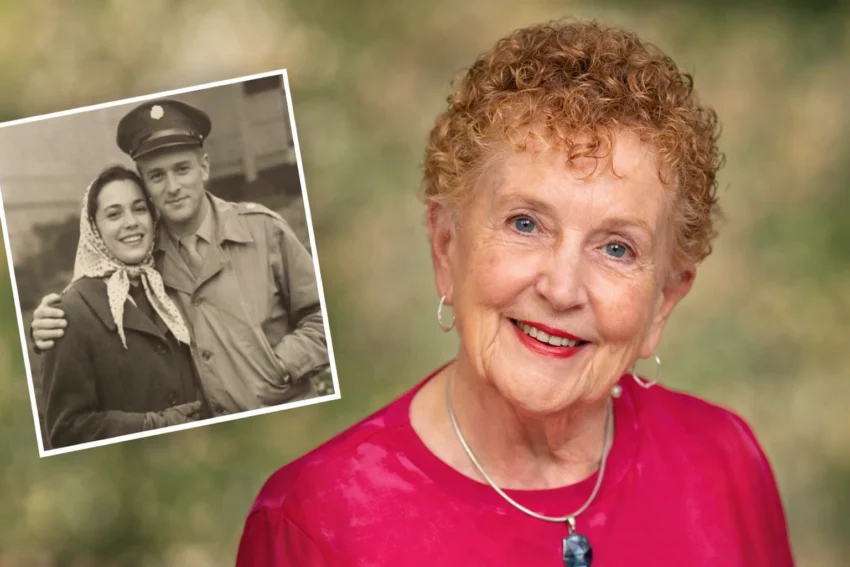
Millie Williams spent most of her life out of the spotlight, even though she stood close to one of the most recognizable figures in modern American culture. For decades, her name appeared mainly as a footnote in the story of Hugh Hefner, the founder of Playboy. But as fuller records of her life emerged—especially following her death in December 2025 at the age of 99—a more complete picture has come into focus. She was not just “Hefner’s first wife,” but a teacher, a mother, a professional, and a woman who lived nearly a century shaped by both ordinary commitments and extraordinary proximity to cultural change.
Early Life and Family
Millie Williams was born Mildred Williams on March 10, 1926, in Chicago, Illinois. She grew up in a working-class household during the Great Depression, one of five daughters in a family that emphasized discipline and responsibility. Her father worked as a streetcar conductor, while her mother managed the home, raising the girls in an environment that valued education and steady work. Chicago in the 1930s and 1940s was a city of industry and neighborhoods, and Williams’s upbringing reflected that grounded, practical culture.
Her early years were not marked by fame or privilege, but by a steady path through school and community life. She attended local public schools and developed an interest in teaching, a profession that offered both stability and purpose for women of her generation. Friends and family later described her as thoughtful and capable, someone who approached life with a sense of duty rather than ambition for public recognition.
Meeting Hugh Hefner
Williams met Hugh Hefner while they were both students at Steinmetz High School on Chicago’s Northwest Side. Their relationship began in the late 1940s, a time when both were navigating early adulthood shaped by World War II and its aftermath. Hefner served in the U.S. Army for two years, and the two maintained contact during that period, deepening their connection.
After the war, both attended the University of Illinois. Hefner studied psychology and creative writing, while Williams pursued a degree in education. Their paths during these years reflected different but complementary ambitions—his leaning toward creative expression and media, hers toward teaching and stability. They married on June 15, 1949, beginning a partnership that would precede one of the most influential media ventures of the 20th century.
Marriage Before Fame
When Millie Williams married Hugh Hefner, there was no Playboy, no mansion, and no cultural empire. Their early married life was modest and typical of many young couples in postwar America. They lived for a time with Hefner’s parents before moving into their own apartment in Chicago’s Hyde Park neighborhood.
Williams worked as a teacher and supported the household while Hefner began his career in publishing. At one point, he earned about $60 a week as a copywriter at Esquire magazine. These were years defined more by financial constraint than glamour, and Williams played a central role in maintaining stability at home.
The couple had two children: Christie, born in 1952, and David, born in 1955. Williams took on the primary responsibilities of raising them, even as Hefner’s ambitions began to grow. By 1953, he launched Playboy from their home, using borrowed money and determination to produce the first issue. The magazine’s success came quickly, but the pressures it brought were equally immediate.
A Defining Strain
One of the most widely discussed aspects of Williams’s marriage to Hefner stems from an event that occurred early in their relationship. While Hefner was in the Army, Williams had an affair, something he later described as deeply painful and formative in shaping his attitudes toward relationships and sexuality. Hefner himself spoke about this experience publicly, often framing it as a turning point in his emotional life.
But here’s the thing. That narrative, repeated in interviews and profiles, reflects Hefner’s perspective more than a balanced account of their relationship. For years, it overshadowed Williams’s own identity, reducing her to a role in someone else’s story. While the event is part of the historical record, it does not define the entirety of her life or her character.
As Hefner’s career expanded and Playboy grew into a national phenomenon, the couple’s marriage faced increasing strain. By 1959, they divorced, ending a decade-long partnership that had begun before fame and ended in its early glow.
Life After Divorce
After the divorce, Millie Williams took custody of Christie and David and remained in the Chicago area. Her life in the years that followed was marked by independence and a deliberate move away from public attention. She settled into a high-rise on the city’s North Side and focused on raising her children in a stable environment.
Her relationship with Hefner did not dissolve into hostility. According to family accounts, both parents remained involved in their children’s lives, maintaining a workable co-parenting relationship. Christie Hefner, who would later lead Playboy Enterprises, has spoken about seeing her father regularly even after the divorce, suggesting that Williams prioritized continuity for her children.
Williams later married Ed Gunn, a partner in her divorce attorney’s firm. She took the name Millie Hefner Gunn and moved to Wilmette, a suburb north of Chicago. During this period, she became active in local politics and community life, participating in activities such as duplicate bridge, bowling leagues, and golf. The marriage lasted about 11 years before ending in divorce.
A Long-Term Partnership and Renewed Stability
The most enduring relationship of Williams’s later life was with Pierre Rohrbach, a Swiss-born hair stylist and salon owner. They married and spent nearly 50 years together, building a life that combined personal stability with shared interests. Friends and family described Rohrbach as the great love of her life, a partner who brought lasting happiness.
Together, they traveled extensively, exploring destinations that ranged from European capitals to African safaris. These experiences marked a shift from the earlier years of financial constraint and domestic focus, reflecting a later phase of life shaped by curiosity and independence.
Williams’s personal growth during this period extended beyond travel. She pursued intellectual interests, including completing the University of Chicago’s Great Books program, which emphasizes reading and discussing classic works of literature and philosophy. This commitment to learning reflected a lifelong interest in education that had begun in her youth.
Career and Work Later in Life
Not many people know this, but Millie Williams eventually became part of the Playboy organization in a professional capacity. After her daughter Christie rose through the company’s ranks and became president in 1982, Williams took on roles within the business.
She first worked with a retail concept known as Playtique and later joined the human resources department at Playboy Enterprises. Her responsibilities included coordinating employee programs such as tuition reimbursement, relocation assistance, and internal events. She remained active in this role well into her 70s, demonstrating a work ethic that extended far beyond traditional retirement age.
Her work at Playboy was not about public visibility or influence, but about contributing to the organization in practical ways. It also reflected a certain reconciliation with the institution that had once been at the center of her marriage and its dissolution.
Family and Relationship with Her Children
Millie Williams’s relationship with her children remained one of the central pillars of her life. Christie Hefner, in particular, became a prominent figure as the longtime leader of Playboy Enterprises. Her career placed her in a public role that contrasted with her mother’s preference for privacy, yet the two maintained a close bond.
David Hefner, Williams’s son, pursued a more private path, staying largely out of the public eye. Williams’s approach to parenting appears to have emphasized independence and support, allowing both children to shape their own lives without heavy public scrutiny.
Despite the complexities of her relationship with Hugh Hefner, Williams’s role as a mother connected her permanently to his legacy. Yet her own identity within the family remained distinct, defined by her choices and values rather than by his public persona.
Later Years and Final Chapter
In her later years, Millie Williams remained active and engaged. She continued to follow sports teams such as the Chicago Bears and White Sox and attended games into her 90s. She also stayed connected to cultural life, including attending opera performances and participating in community activities.
She moved to The Clare, a senior living community in Chicago, in 2021. Even in her final years, she maintained a routine that included reading, social interaction, and intellectual engagement. Family members described her as someone who retained curiosity and independence well into old age.
Williams died on December 13, 2025, at the age of 99. Her life spanned nearly a century, covering eras from the Great Depression through the digital age. The longevity of her life allowed her to experience profound cultural and social change, much of it from a perspective that remained grounded and personal.
Public Image and Cultural Context
For much of her life, Millie Williams existed in the shadow of a larger cultural figure. Hugh Hefner’s role in shaping Playboy and influencing American attitudes toward sexuality made him a subject of constant media attention. Williams, by contrast, remained largely private, appearing in public narratives only when her connection to Hefner was relevant.
That said, the way she has been portrayed in media has evolved. Earlier coverage often reduced her to a brief biographical detail, while more recent reporting has acknowledged the breadth of her life. Her story now serves as a reminder that individuals connected to famous figures often have rich and independent histories that deserve recognition.
Her decision to live largely outside the spotlight may have contributed to the limited public record about her. But it also reflects a deliberate choice to prioritize personal life over public identity, a contrast that adds depth to the broader story of the Playboy era.
Financial Life and Net Worth
There is little publicly confirmed information about Millie Williams’s personal net worth. Unlike her former husband, whose wealth and business ventures were widely documented, Williams maintained financial privacy throughout her life. Estimates, when they appear online, are often speculative and should be treated cautiously.
Her financial stability likely came from a combination of divorce settlements, later marriages, and her own work. Her long-term association with Playboy Enterprises through employment and family ties may also have contributed to her financial security. Still, without verified figures, it is more accurate to describe her financial life as private and stable rather than to assign a specific value.
Frequently Asked Questions
Who was Millie Williams?
Millie Williams, born Mildred Williams, was the first wife of Playboy founder Hugh Hefner. She was also a teacher, a mother of two, and later worked at Playboy Enterprises. Her life extended far beyond her early marriage, spanning nearly a century of personal and social change.
When did Millie Williams die?
She died on December 13, 2025, at the age of 99. Her death was confirmed through obituary reports that provided a fuller account of her life than had previously been available.
Did Millie Williams have children?
Yes, she had two children with Hugh Hefner: Christie Hefner and David Hefner. Christie went on to become a major figure in Playboy Enterprises, serving as CEO for many years.
What did Millie Williams do for a living?
She initially trained and worked as a teacher. Later in life, she worked within Playboy Enterprises, particularly in human resources and retail-related roles. She remained professionally active into her 70s.
Was Millie Williams remarried?
Yes, she married twice after divorcing Hugh Hefner. Her second marriage was to Ed Gunn, and her third, long-lasting marriage was to Pierre Rohrbach, with whom she spent nearly five decades.
Why is Millie Williams still relevant today?
Interest in her life continues because of her connection to Hugh Hefner and the early history of Playboy. Recent coverage, especially following her death, has also highlighted her own life story, prompting renewed attention.
Conclusion
Millie Williams’s life resists easy summary. For years, she was treated as a footnote to a larger cultural figure, her identity compressed into a single relationship that ended decades before her death. But the fuller record now available shows a life shaped by education, family, work, and long-term personal growth.
Her story is not about fame, even though she lived close to it. It is about continuity, about raising children, forming lasting relationships, and remaining engaged with the world across nearly a century. That steadiness stands in contrast to the more public, more turbulent narrative of the Playboy empire.
What’s surprising is how much of her life unfolded outside the frame of public attention, even as interest in her continues to grow. Readers who come looking for a simple answer often find something more layered: a woman who lived fully on her own terms, even when history tried to reduce her to a supporting role.
That is why Millie Williams still matters. Not because she was briefly connected to fame, but because her life reminds us that the people behind well-known stories often carry their own, quieter histories worth telling.