
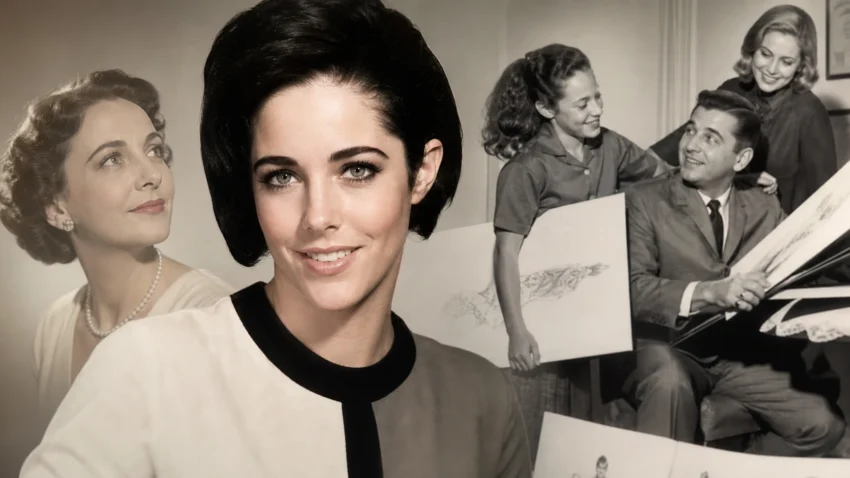
Nia Novella Travilla was born into a family whose name still glows around classic Hollywood, even though her own life unfolded far from the kind of publicity that followed her parents. Her father, William “Travilla” Travilla, dressed Marilyn Monroe in some of the most recognizable costumes ever put on film. Her mother, Dona Drake, was a singer, dancer, bandleader, and actress whose career reflected both the promise and the painful distortions of the studio era.
Yet Nia’s story is not the story of a child who chased fame. It is the quieter biography of a woman connected to Hollywood history by birth, but remembered mostly through family records, memorial notices, and scattered references from people trying to understand the Travilla and Drake family line. That makes her life harder to reconstruct, but also more revealing. What is known about Nia Novella Travilla tells us something about fame, privacy, inheritance, and the people who live just outside the spotlight.
Early Life and Family Background
Nia Novella Travilla was born in Los Angeles, California, in August 1951. Most public memorial records list her birth date as August 16, 1951, though some genealogy-style sources have repeated a slightly different date. Her parents were William Travilla, the Oscar-winning costume designer usually known professionally as Travilla, and Dona Drake, a performer whose career stretched across music, dance, and film.
By the time Nia arrived, both of her parents had already built lives inside show business. Travilla had become a respected designer in Hollywood, and Drake had worked for years under different stage names, including Rita Rio and Dona Drake. Their daughter was born into a household where style, performance, and reinvention were not abstract ideas. They were part of daily life.
Nia appears to have been the couple’s only child. That fact matters because it made her the direct family link between two very different Hollywood legacies. On one side was Travilla’s world of studio costume departments, fittings, awards, and screen images. On the other was Drake’s path through music, film, publicity, and a more complicated personal history than many studio-era biographies once admitted.
Her Father, William Travilla
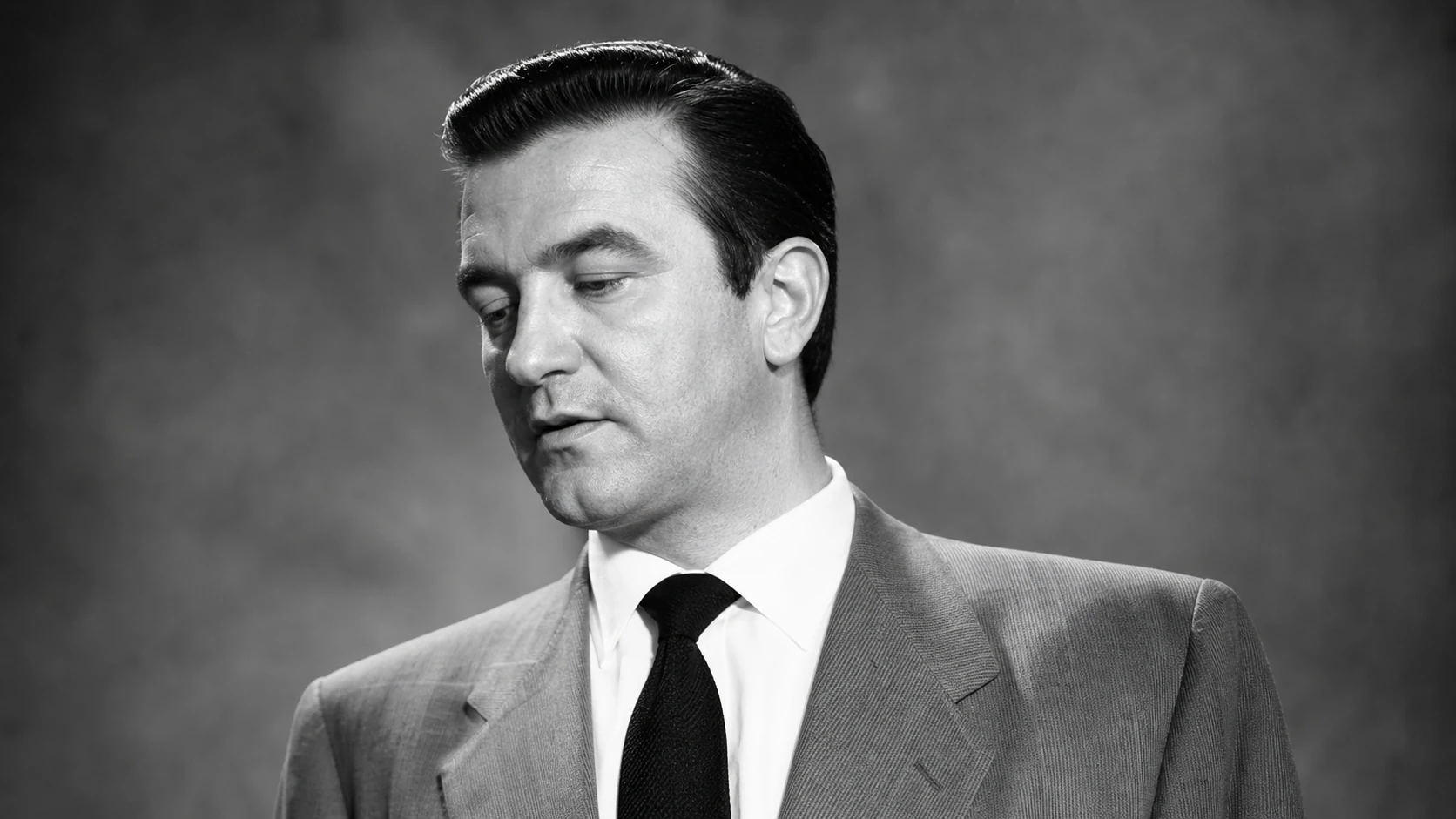
William Travilla was born in 1920 and became one of the best-known costume designers of mid-century Hollywood. He won an Academy Award for his work on “The Adventures of Don Juan,” sharing the honor with Leah Rhodes and Marjorie Best. His career included film, television, and celebrity fashion, but one association came to define his public reputation more than any other. Travilla became closely linked to Marilyn Monroe.
That link was not casual. Travilla designed several of Monroe’s film costumes, including the white halter dress she wore in “The Seven Year Itch.” The image of Monroe standing over a subway grate while the dress lifts around her became one of the most reproduced images in American movie history. For Travilla, it meant that a piece of costume work became part of global popular memory.
For Nia, that kind of fame must have been both ordinary and extraordinary. Her father’s work was part of the household, yet it belonged to a public world that kept growing larger with time. By the late twentieth century, Travilla was no longer only a working designer from Hollywood’s studio years. He had become part of the mythology of Monroe, celebrity style, and the visual language of classic film.
Her Mother, Dona Drake
Dona Drake’s story is just as important to understanding Nia, though it is often less widely known. Drake was born Eunice Westmoreland in 1914 and performed under several names before settling into the screen identity remembered today. She worked as a singer, dancer, bandleader, and actress, moving through nightclubs, musical shorts, and studio pictures. Her career included appearances in films such as “Road to Morocco,” “Beyond the Forest,” “So This Is New York,” and “The Girl from Jones Beach.”
Drake’s public identity was shaped by Hollywood’s racial and ethnic casting habits. She was often presented in publicity as exotic, Latin, or otherwise non-white in a way that suited studio marketing, while later researchers have pointed to a more complex family background. Her career shows how the film industry could make space for a performer while also forcing that performer into narrow and sometimes misleading categories. That history has become one reason modern audiences return to her work with fresh interest.
Nia grew up as the daughter of a woman who understood performance in more than one sense. Drake performed on stage and on screen, but she also had to survive an industry that shaped and reshaped her public identity. That family background gives Nia’s own privacy a deeper meaning. She was born to parents whose work depended on public image, but she did not become a public image herself.
Childhood in a Hollywood Household
There are few detailed public accounts of Nia’s childhood. What can be said with confidence is that she came of age in Los Angeles, close to the networks of entertainment, fashion, and studio culture that shaped her parents’ lives. Her early years overlapped with a period when her father’s career was strongly tied to high-profile film work and her mother’s screen career was entering its later phase. She was born into a family already familiar with both success and instability.
Her parents’ marriage began in 1944, but later accounts say they separated in the mid-1950s while remaining legally married until Drake’s death in 1989. That means Nia’s childhood likely unfolded inside a family structure more complicated than the polished photographs and studio biographies suggested. Separation did not erase family ties, and public accounts still connect Nia closely with both parents. But the reality was not the simple story of a perfect Hollywood household.
Growing up around fame can create a strange double vision. A child sees the famous parent as a parent first, while the public sees the same person through costumes, credits, and photographs. Nia’s life seems to have developed in that gap between private reality and public memory. The available record does not show her courting celebrity, and that restraint is one of the defining facts about her.
Education and Early Ambitions
Reliable public information about Nia Novella Travilla’s education is limited. No widely available record confirms her schools, college years, or formal training in a way that can be stated with certainty. Some later biographical summaries describe her as a veterinarian, which would imply serious academic and professional preparation. Still, the details of where and when she studied have not been firmly documented in open public sources.
That uncertainty does not make the claim meaningless. Memorial and genealogy-style sources often describe Nia as a veterinarian, and some references connect her to animal care and dog breeding. The problem is that many of those references repeat one another without showing original records. A careful biography should acknowledge the claim without building an elaborate education story around it.
What seems clear is that Nia did not follow the most predictable path for the daughter of two entertainment figures. There is no strong public record of a film career, a long modeling career, or a major role in Hollywood fashion. Her adult life appears to have moved away from the machinery that made her surname recognizable. That choice may be one of the most important things we can infer from the record, even if the record itself remains spare.
A Brief Public Glimpse as Travilla’s Daughter
One of the few public glimpses of Nia as a young woman comes from a late-1960s fashion context. A newspaper feature from that period has been described as showing Travilla discussing clothing he designed for his teenage daughter. The references connected to that feature describe Nia modeling a gown by her father and living in a household with animals. The coverage appears to have framed her as a stylish young woman with possible entertainment prospects.
That kind of article made sense for its time. The daughter of a famous costume designer and an actress had obvious media appeal, especially if she could be photographed wearing her father’s work. But there is a difference between a public appearance and a public career. Nia’s name does not appear in major filmographies as an actress with a sustained body of work.
The moment is still useful because it shows how close she remained to her father’s world as a teenager. Travilla was not simply a famous name attached to her biography; he designed for her, and she appears to have stepped briefly into the fashion spotlight through him. After that, the record grows quiet again. That quietness suggests either a deliberate move away from publicity or simply a private life that left few searchable traces.
Career and Work with Animals
The most repeated claim about Nia Novella Travilla’s adult career is that she became a veterinarian. Public memorial pages and family-history references describe her as a local veterinarian, and some online traces connect her with Miniature Schnauzers and dog breeding. Those details have circulated widely enough that they should be part of any fair account of her life. But they should also be handled with care because the strongest supporting documentation is not easily available in the open record.
No major public profile, professional association obituary, or detailed licensing record is commonly attached to her name in general search results. That does not mean she was not a veterinarian. It means that writers should avoid inventing the name of a clinic, the dates of a practice, or the scale of her work. Responsible biography has to stop where the evidence stops.
Even with that caution, the animal-care thread feels meaningful. It places Nia’s adult life in a world very different from film premieres, studio lots, and costume archives. If the veterinary and dog-breeding accounts are accurate, she made a life around animals rather than entertainment. That contrast helps explain why she is remembered less through celebrity media and more through scattered personal and family references.
Marriage and Personal Life
Nia’s personal life remains only partly documented. Some record indexes and later summaries connect her to Jose L. Ariza, with claims that they married in the early 1970s and later divorced. Because many of those records are available only through database snippets or secondary summaries, the exact details should be treated cautiously. What can be said is that her adult relationships were not widely covered by mainstream entertainment press.
There is also no clear public record showing that Nia had children. Several secondary references state that she had no children, and no widely available genealogy records identify confirmed descendants. Given the limits of public documentation, that should be phrased carefully rather than as a sweeping claim about private life. The safest account is that no publicly verified children are associated with her.
Her privacy is not a blank space to decorate. It is part of the story. Unlike many people connected to Hollywood families, Nia does not seem to have used her surname to build a public brand, sell memoirs, appear in documentaries, or become a recurring media source. Her life after youth appears to have been lived mostly outside the entertainment press.
Money, Inheritance, and Net Worth
There is no credible public estimate of Nia Novella Travilla’s personal net worth. Any website that gives a precise figure without records should be treated with skepticism. She was connected to a famous designer and a working actress, but family fame does not automatically translate into a clear financial picture. Estate details, inheritance arrangements, property records, and professional income are not widely documented.
Her father’s work later became extremely valuable in the world of film memorabilia. Marilyn Monroe’s white dress from “The Seven Year Itch,” designed by Travilla, became one of the most famous costume pieces ever sold at auction. But that does not mean Nia personally profited from every later sale, exhibition, or licensing use connected to her father’s designs. Ownership of costumes, archives, sketches, and intellectual rights can be divided among studios, collectors, estates, and private buyers.
The honest answer is that Nia’s income sources and assets are not publicly clear. If she worked as a veterinarian, that would likely have been a major part of her adult livelihood, but the details are not confirmed enough to calculate earnings. For a biography, it is better to say that her net worth is unknown than to repeat made-up numbers. Precision matters most where the record is thinnest.
Public Image and Reputation
Nia Novella Travilla never developed the kind of public image attached to her parents. Travilla became the designer behind unforgettable screen glamour, while Drake became an actress whose identity and career invite renewed historical interest. Nia’s image is quieter and more fragmented. She appears in public memory as a daughter, a possible veterinarian, and a private woman connected to two important entertainment stories.
That kind of reputation can be difficult for search users because it does not provide a simple narrative. She was not a starlet who rose and fell, a celebrity heir in tabloids, or a business figure with a public résumé. Her story is closer to the lives of many children of famous people who choose not to continue the family’s public role. They remain important to family history without becoming public figures themselves.
The warmth around Nia in later references often comes from the animal-care descriptions attached to her. Being remembered as a veterinarian or dog breeder gives her a humane and grounded identity beyond Hollywood lineage. But again, a responsible writer must separate tone from proof. The affection may be sincere, but the details still need records.
Her Parents’ Later Years
Dona Drake died in 1989, after a long life in and around performance. By then, her early identity as Rita Rio and her later film work had already begun to blur in public memory. Modern preservation efforts and film-history writing have helped restore some attention to her talent and to the racial complexities of her career. Nia lived long enough to see her mother’s public story remain incomplete, though renewed interest would grow more strongly after both women had died.
William Travilla died in 1990, just a year after Drake. His death marked the end of the immediate parental generation in Nia’s life. Travilla’s reputation, however, continued to grow through fashion retrospectives, Monroe memorabilia sales, and repeated public fascination with old Hollywood design. He became more famous in death as the culture kept returning to Monroe’s image.
For Nia, losing both parents within a short span must have been a profound private change, though public sources do not describe her response. She was in her late thirties when her mother died and still under forty when her father died. After that, she lived for a little more than a decade. Those years are among the least documented parts of her life.
Death and Final Years
Nia Novella Travilla died on October 1, 2002. Public memorial records state that she was 51 and that she was cremated. The cause of death is not clearly confirmed in reliable open sources. Because of that, any claim about a specific illness or circumstance should be treated as unverified unless tied to a primary record or a credible obituary.
Her death at 51 was relatively young, especially considering that she had outlived both parents by only a little more than a decade. The limited public notice surrounding her passing reinforces how private her life had become. Unlike her father, whose death was covered in major newspapers because of his professional stature, Nia’s death did not produce a widely circulated public profile. That difference says less about her worth than about the way fame decides whose lives get recorded.
After her death, her name continued to appear mostly in relation to her parents. Researchers of William Travilla find her as his daughter. Readers of Dona Drake’s biography find her as Drake’s only child. People interested in family lines, classic Hollywood, or the afterlives of studio-era figures find Nia at the edge of a much larger story.
Why Her Story Still Matters
Nia Novella Travilla matters because she represents the private side of a public family. Her father helped create images that millions of people recognize, even when they do not know his name. Her mother lived through an entertainment system that rewarded talent while manipulating identity. Nia inherited the consequences of both histories without becoming a public performer herself.
Her story also reminds readers that not every biography can or should be shaped like a celebrity profile. Some lives are best understood through context, restraint, and respect for what is not known. Nia’s biography cannot honestly provide a long list of interviews, awards, public scandals, or career milestones. What it can do is locate her accurately inside a family story that still matters.
There is value in that kind of careful recovery. Search culture often pushes every name toward spectacle, but Nia resists that treatment. She was connected to spectacle, yet she seems to have chosen ordinary privacy. That makes her life less documented, but not less worthy of being handled with care.
Frequently Asked Questions
Who was Nia Novella Travilla?
Nia Novella Travilla was the daughter of Hollywood costume designer William Travilla and actress-singer Dona Drake. She was born in Los Angeles in August 1951 and died in October 2002 at age 51. She is most often searched because of her parents’ importance to classic Hollywood history.
She was not a major public celebrity in her own right. Her life appears to have been largely private, especially in adulthood. Public references describe her mainly through family records, memorial notices, and claims about her work with animals.
Was Nia Novella Travilla related to Marilyn Monroe?
Nia was not related to Marilyn Monroe by blood or marriage. Her connection to Monroe came through her father, William Travilla, who designed several of Monroe’s most famous film costumes. That professional connection made the Travilla name part of Monroe’s public image.
The best-known example is the white dress Monroe wore in “The Seven Year Itch.” Travilla designed that dress, and it became one of the most famous costumes in film history. Nia’s link to Monroe is therefore historical and professional through her father’s career.
Was Nia Novella Travilla an actress?
There is no strong evidence that Nia Novella Travilla had a sustained acting career. A late-1960s fashion feature appears to have shown her modeling a gown designed by her father, and some captions from that period may have suggested entertainment ambitions. But no major filmography supports the idea that she became a working actress.
This distinction matters because some online summaries blur family background into career fact. Nia was the daughter of an actress and a costume designer, but that does not make her an actress. The available record points more toward a private adult life than a Hollywood career.
Was Nia Novella Travilla a veterinarian?
Several public memorial and family-history references describe Nia Novella Travilla as a veterinarian. Some also connect her to dog breeding, especially Miniature Schnauzers. These claims are widely repeated, but detailed public documentation of her veterinary education or practice is limited.
The fairest answer is that she is commonly described as a veterinarian, but the specific details remain hard to verify through open sources. A careful biography should not invent clinics, degrees, or professional honors without proof. The animal-care thread is meaningful, but it should be reported with caution.
Did Nia Novella Travilla have children?
No publicly verified children are commonly associated with Nia Novella Travilla. Some secondary sources state that she had no children, and available genealogy-style references do not clearly identify descendants. Because private family records can be incomplete, that should not be overstated beyond the public record.
The stronger statement is that no confirmed children are visible in the commonly available sources. Her family line is usually discussed through her parents rather than through descendants of her own. That is one reason researchers often treat her as the closing figure in the immediate Travilla-Drake household.
What was Nia Novella Travilla’s net worth?
There is no credible public net worth figure for Nia Novella Travilla. Any exact number should be viewed skeptically unless it is tied to estate records, property documents, or reliable financial reporting. Her parents’ fame does not provide enough information to estimate her personal wealth.
Her father’s designs became valuable in fashion and film memorabilia circles, but that does not prove Nia personally controlled or profited from those assets. If she worked as a veterinarian, that may have been an important source of income, but the details are not public enough to calculate. The most accurate answer is that her net worth is unknown.
When did Nia Novella Travilla die?
Nia Novella Travilla died on October 1, 2002, at age 51. Public memorial records list her as cremated. The cause of death has not been clearly confirmed in reliable open sources.
Her death came after both of her parents had already died. Dona Drake died in 1989, and William Travilla died in 1990. Nia lived a private life in the years that followed, and little public information is available about her final period.
Conclusion
Nia Novella Travilla’s biography is not a story of public triumph, scandal, or celebrity reinvention. It is the story of a woman born close to Hollywood glamour who seems to have lived much of her life away from it. That alone makes her different from the image many people expect when they search a famous surname.
Her parents left behind unusually vivid public legacies. William Travilla helped shape the look of classic Hollywood and dressed Marilyn Monroe in images that still define movie glamour. Dona Drake left a career that modern viewers are beginning to understand with more care, especially because of the racial and identity pressures built into studio-era performance.
Nia’s own life asks for a different kind of attention. The facts are limited, but the limits should not be treated as failure. They show a person who belonged to Hollywood history without being consumed by it.
What remains is a portrait built from confirmed dates, family context, and careful restraint. Nia Novella Travilla matters because she reminds us that the children of famous people have lives beyond the fame that surrounds them. Sometimes the most respectful biography is the one that knows where to stop.