
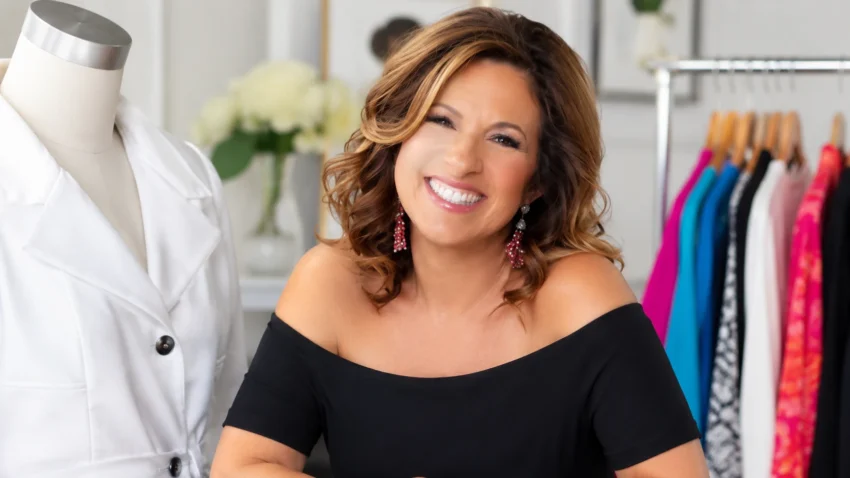
Susan Graver became famous in a way that is rare in fashion. She did not build her name through runway spectacle, celebrity gowns, or magazine campaigns. She built it through television, fabric, fit, and a direct relationship with women who wanted clothes that worked in real life. For decades, QVC viewers have known her as the energetic designer behind Susan Graver Style, a fashion line built around comfort, polish, color, and the kind of wardrobe pieces many shoppers reach for again and again.
That visibility naturally leads to curiosity about Susan Graver net worth. Viewers see the airtime, the product range, the loyal customer base, and the long career, then wonder how much wealth that kind of success can create. The honest answer is that Susan Graver’s exact net worth has not been publicly confirmed. Still, her career clearly points to long-term financial success, with most reasonable estimates placing her wealth in the millionaire range rather than the exaggerated figures often repeated online.
Who Is Susan Graver?
Susan Graver is an American fashion designer and television shopping personality best known for her long association with QVC. She is the face behind Susan Graver Style, a women’s clothing collection sold through the network and its digital platforms. Her brand is associated with practical fashion rather than runway drama, with an emphasis on easy-care fabrics, flattering shapes, and clothes designed for women who want comfort without giving up polish. That has made her one of the most recognizable designer names in QVC fashion.
Her appeal comes partly from the way she explains clothes. Graver does not sell fashion as something distant or intimidating. She talks about stretch, drape, waistbands, sleeve length, travel, washing, layering, and the everyday problems women actually face when getting dressed. That practical language has helped her build trust with shoppers who may never meet her but feel they know her style philosophy.
Her most loyal customers often associate her with fabric-driven designs, especially the easy-wearing knit pieces that became a major part of her QVC identity. The brand’s pieces commonly focus on workwear, casualwear, separates, dresses, jackets, and occasion-ready items that can move between settings. Instead of chasing short trend cycles, Graver’s business has been built on consistency. In retail, that kind of consistency can be more valuable than brief bursts of fame.
Early Life and First Interest in Fashion
Susan Graver has kept much of her early personal life away from the public spotlight. Unlike celebrities whose childhoods are heavily documented, she became known through her work rather than through a public biography. Publicly available information about her exact birth date, childhood home, schooling, and family background is limited. That privacy should be respected rather than filled with guesses.
What is clear is that Graver developed an early interest in clothing, design, and how women use fashion in daily life. Her later career suggests a designer shaped less by abstract fashion theory and more by a practical understanding of how clothes feel on the body. She has often presented garments with the confidence of someone who thinks about the customer first. That customer-first approach would become the center of her public identity.
Her career also reflects a designer who understood commercial fashion from the inside. The QVC format requires more than sketching attractive pieces. A designer has to know how fabric behaves, how garments fit different body types, how colors read on screen, and how to explain value quickly. Graver’s long run suggests she mastered that mix earlier than many designers who came from more traditional fashion paths.
Building a Career Before QVC Fame
Before becoming closely associated with QVC, Susan Graver worked in fashion and developed experience in apparel design. Public descriptions of her career often note that she had a fashion background before her television-shopping success. That matters because her QVC role was not simply that of a presenter selling someone else’s clothes. She entered the space as a designer with a clear eye for wearable women’s fashion.
The early part of her career likely gave her a strong understanding of production, fit, materials, and retail expectations. Those skills are easy to underestimate because the QVC environment can look conversational and spontaneous. Behind each on-air item, however, there is a chain of design decisions, fabric choices, manufacturing standards, price targets, and customer feedback. Graver’s ability to speak fluently about those details helped separate her from many television sellers.
Her breakthrough was not one dramatic moment but a slow accumulation of trust. Viewers returned because they knew what to expect from her clothes. They knew the brand would usually offer color, comfort, washable fabrics, and styling ideas for everyday life. In a business where customers can change loyalties quickly, that repeat connection became one of her greatest assets.
Career Breakthrough at QVC
Susan Graver’s major public breakthrough came through QVC, where she became one of the channel’s best-known fashion designers. QVC gave her something most designers never receive: direct access to shoppers in their homes. Instead of relying on department-store displays or fashion editors, she could explain each garment herself. That format allowed her personality and product knowledge to become part of the brand.
Television shopping rewards designers who can make products understandable in real time. Graver became skilled at showing how a top moved, why a waistband was comfortable, how a jacket could be styled, and why a fabric mattered. Her presentations often focused on the small details that affect whether a woman actually wears something after buying it. That practical focus helped her stand out in a crowded apparel market.
Her QVC success also came from timing. Home shopping became a powerful retail force for customers who liked convenience, demonstration, and trust-based buying. Fashion can be difficult to sell without a fitting room, but Graver turned that challenge into part of her pitch. By explaining measurements, stretch, care, and styling, she reduced uncertainty for viewers. That skill helped turn casual viewers into repeat buyers.
The Susan Graver Style Brand
Susan Graver Style is built around wearable women’s clothing, not fashion fantasy. The line is known for tops, pants, cardigans, jackets, dresses, tunics, and sets that are easy to mix into an existing wardrobe. Many pieces are designed for women who want clothes that can move from work to errands, travel, family events, or dinner without needing much fuss. That clear identity has helped the brand stay commercially relevant.
The brand’s strength lies in solving real wardrobe problems. A shopper might want a top that does not cling, pants that feel comfortable while still looking neat, or a dress that can be packed for a trip without looking tired. Graver’s line speaks directly to those concerns. It is fashion built around use, not just appearance.
That approach may sound simple, but it is difficult to sustain at scale. Practical fashion has to be consistent, or customers stop trusting it. If a fabric pills, a fit changes too much, or sizing becomes unpredictable, repeat customers notice quickly. Graver’s long QVC presence suggests that her brand has maintained enough reliability to keep customers returning over many years.
Liquid Knit and the Fabric Identity of Her Brand
One of the most recognizable parts of Susan Graver’s QVC identity is her association with easy-care knit fabrics, especially the Liquid Knit category that shoppers often connect with her name. The appeal is straightforward: the fabric is presented as soft, drapey, washable, and travel-friendly. For many women, that combination is more useful than a designer label alone. It gives them a reason to return for different styles in the same fabric family.
A signature fabric can become a powerful business tool. It gives customers a shorthand for what they are buying. Instead of starting from scratch with every new top or dress, a returning shopper can think, “I know how this feels and how it washes.” That familiarity lowers the risk of buying apparel from a screen.
Fabric identity also helps explain why Graver’s brand has had staying power. In television shopping, a product needs to demonstrate well. A fabric that moves, reflects light attractively, and can be explained through touch and drape gives the presenter something concrete to sell. Graver’s ability to connect fabric features to everyday needs became a major part of her commercial language.
Susan Graver Net Worth and Income Sources
Susan Graver net worth is usually estimated in the millionaire range, but the exact figure is not publicly verified. Many online estimates place her wealth around several million dollars, while some less reliable sources give much higher numbers. The problem is that most of these figures do not cite financial filings, contract details, audited records, or direct confirmation. For that reason, the safest estimate is that she is likely worth several million dollars, with any precise number remaining uncertain.
Her income likely comes from her long-running QVC fashion business. Depending on the structure of her agreements, she may earn money from design work, brand licensing, on-air appearances, royalties, consulting, or a combination of those sources. In fashion, a name-branded collection can produce income in several ways, but the details depend heavily on private contracts. Those contracts are not publicly available in her case.
The strongest evidence of her financial success is not a single number but the length and visibility of her career. A designer who remains on a major retail platform for decades, with a wide product range and loyal customer base, is almost certainly earning at a level far above the average designer. Still, personal net worth is not the same as sales volume. Taxes, business costs, contract splits, investments, and private assets all affect the final number.
Why Exact Net Worth Claims Should Be Treated Carefully
Net worth is often misunderstood, especially for people connected to retail brands. A clothing line can generate large sales without all of that money going to the designer. Revenue has to cover manufacturing, shipping, returns, marketing, production, platform costs, and retailer margins. The designer’s share depends on the business arrangement. Without that information, any exact estimate is only a guess.
This is why Susan Graver’s online net worth figures vary so widely. Some websites appear to repeat the same estimated numbers without showing a method. Others may confuse brand popularity with personal fortune. A popular QVC designer can be wealthy, but that does not mean every dollar spent on the brand becomes personal income. Responsible reporting has to keep that distinction clear.
The most believable estimate is a cautious one. Susan Graver’s decades of success make it reasonable to place her in the millionaire category. A range of several million dollars is more credible than extreme claims that imply a major brand sale or large equity stake without evidence. Unless Graver, QVC, or a legal financial record confirms more, the exact figure should remain described as estimated.
Marriage, Children, and Private Family Life
Susan Graver is known to have a family life outside her QVC work, though she has kept many personal details private. Public mentions over the years have referred to her as a wife and mother, and she has occasionally shared family context with viewers in a warm, conversational way. Still, her public identity is centered on fashion rather than domestic exposure. She has not built her brand by turning her private life into constant content.
That restraint is part of her appeal. Many QVC personalities develop close relationships with viewers, but the best of them still maintain boundaries. Graver gives enough personality to feel familiar without making every family detail public. For a longtime television figure, that balance can be difficult to manage.
Her family context matters because it helps explain her design point of view. She often speaks to women with full lives, busy schedules, changing bodies, and practical needs. Whether discussing work, travel, events, or daily errands, she presents clothes as part of a real routine. That tone likely comes from understanding that fashion has to work beyond the studio lights.
Public Image and Viewer Loyalty
Susan Graver’s public image is energetic, polished, and approachable. She is known for speaking quickly, explaining fabric details with enthusiasm, and treating clothing as something joyful but useful. Some viewers love that high-energy presentation style, while others find it intense. Either way, it is unmistakably hers, and in television retail, being memorable is a major advantage.
Her loyal shoppers often respond to her confidence. She knows her product language, and she repeats the details that matter to buyers: sleeve coverage, stretch, length, neckline, washability, and how pieces coordinate. That repetition is not accidental. In live retail, a viewer may tune in halfway through a presentation, so important selling points need to be clear more than once.
Over time, her consistency has created a sense of reliability. Customers who like her clothes know the general promise of the brand before seeing each new item. That kind of trust is hard to buy and easy to lose. Graver’s longevity suggests she has protected it carefully.
Setbacks, Criticism, and Business Challenges
Susan Graver has not been associated with major public scandal, but her career has unfolded inside a retail format that faces real pressure. QVC and other television-shopping platforms have had to adapt to e-commerce, social media, streaming, and changing consumer habits. Younger shoppers often discover fashion through short videos, influencers, marketplaces, and brand websites rather than traditional home shopping. That shift affects every designer tied to television retail.
There is also the challenge of apparel returns and sizing expectations. Selling clothing remotely is difficult because customers cannot try items on before buying. Designers must manage fit consistency, fabric expectations, and customer reviews across many body types. A strong television presentation can generate excitement, but the product still has to satisfy customers after delivery.
For Graver, the challenge has been to keep a mature brand feeling current without alienating the shoppers who made it successful. Too much change can weaken loyalty, but too little change can make a line feel dated. Her career suggests she has navigated that tension by keeping the brand’s core promise steady while updating colors, silhouettes, and styling details over time.
Industry Standing and Cultural Influence
Susan Graver’s influence is not best measured by fashion-week prestige. Her impact sits in the world of accessible fashion, where millions of women make buying decisions based on comfort, confidence, and trust. She represents a type of designer who speaks directly to customers rather than through elite fashion filters. That has given her a different kind of cultural reach.
Her career also shows the power of live commerce before the phrase became trendy. Long before social platforms made livestream shopping a major topic, QVC designers were already selling through personality, demonstration, and real-time explanation. Graver became successful in that format because she understood that customers wanted more than a product image. They wanted reassurance.
That influence is especially clear among women who feel overlooked by traditional fashion media. Graver’s line has long focused on wearable pieces rather than clothes made only for very young or very thin bodies. Her brand speaks to customers who want style, but also want sleeves, coverage, comfort, and easy care. That may not sound glamorous, but it is exactly why her work has mattered to her audience.
Where Susan Graver Is Now
Susan Graver remains closely associated with QVC and her fashion line. Her collection continues to be recognized by shoppers who follow QVC fashion programming and online product launches. While many designers fade after one retail cycle, Graver’s name has remained visible for decades. That kind of staying power is rare in any part of fashion.
Her current public role is still tied to presenting, designing, and representing her brand. She remains the person many customers connect with the clothes, which is valuable in a market full of anonymous labels. In a changing retail world, that personal connection gives her a continuing advantage. Shoppers may find products online, but trust still matters when buying clothing without trying it on.
The next stage of her career will likely depend on how well QVC and its fashion brands adapt to newer shopping habits. Digital video, streaming, social selling, and online product discovery are now central to retail. Graver’s brand has the benefit of name recognition, but it also has to meet customers where they shop now. Her history suggests she understands adaptation without abandoning the customer who made the brand successful.
Frequently Asked Questions
What is Susan Graver net worth?
Susan Graver’s exact net worth has not been publicly confirmed. Most reasonable estimates place her in the millionaire range, likely several million dollars, based on her long QVC career and successful fashion line. Any exact figure should be treated as an estimate unless it comes from verified financial records. The safest answer is that she has built substantial wealth, but the precise amount remains private.
How did Susan Graver make her money?
Susan Graver made most of her money through fashion, especially her long-running work with QVC. Her income likely comes from her clothing line, design work, on-air appearances, brand partnerships, licensing, or royalties. The exact terms of her business arrangement have not been made public. Her wealth is tied to a career built on repeat customers and consistent retail visibility.
Is Susan Graver still on QVC?
Susan Graver is still widely associated with QVC and the Susan Graver Style brand. Her clothing remains part of the QVC fashion identity, and she continues to be recognized by viewers as one of the channel’s signature designers. Her long relationship with the network is one of the main reasons people search for her net worth. Few television shopping designers have maintained that level of recognition for so long.
What is Susan Graver famous for?
Susan Graver is famous for designing accessible women’s fashion sold through QVC. Her brand is known for easy-care fabrics, comfortable fits, colorful tops, dresses, pants, and everyday wardrobe pieces. Many shoppers associate her with Liquid Knit and other soft, washable fabrics. Her fame comes from both her products and her lively, direct presentation style.
Is Susan Graver’s net worth publicly verified?
No, Susan Graver’s net worth is not publicly verified. There are many online estimates, but most do not provide strong sourcing or explain how the number was calculated. Since her contracts, assets, royalties, and private investments are not public, exact claims should be viewed carefully. A responsible article should describe her wealth as estimated rather than confirmed.
Does Susan Graver own her clothing line?
The public record does not clearly explain the full ownership structure behind Susan Graver Style. The brand carries her name and is strongly identified with her, but that does not automatically prove full ownership of every business right. Fashion brands can be structured through licensing, design agreements, retail partnerships, or other private contracts. Without confirmed documents, it is best not to make a firm claim.
Why do people trust Susan Graver’s clothes?
People trust Susan Graver’s clothes because her brand has been consistent for many years. Shoppers know the line for comfort, easy care, color, and practical styling. Her on-air explanations also help customers understand how a garment fits and why a fabric may work for their lives. That trust has been central to her long success on QVC.
Conclusion
Susan Graver’s story is not the typical fashion success story. She did not become known by courting runway attention or building a celebrity-centered luxury label. She became successful by understanding what many women actually wanted from their closets: clothes that looked polished, felt comfortable, washed well, and made daily dressing easier. That practical promise has carried her through decades of retail change.
Her net worth remains a private matter, and the exact number should not be overstated. The strongest evidence points to a designer who has earned significant wealth through a long and visible QVC career. A millionaire-level estimate is reasonable, but the very high figures found online should be treated with caution. Without public financial records, certainty would be dishonest.
What makes Graver interesting is not just how much money she may have made. It is how she made her name in a demanding format where the customer decides quickly and returns only if the product works. Her career shows that accessible fashion can create real influence when it is built on trust. For QVC viewers and loyal shoppers, Susan Graver remains a familiar voice in a changing retail world, and that connection is the foundation of her lasting value.