
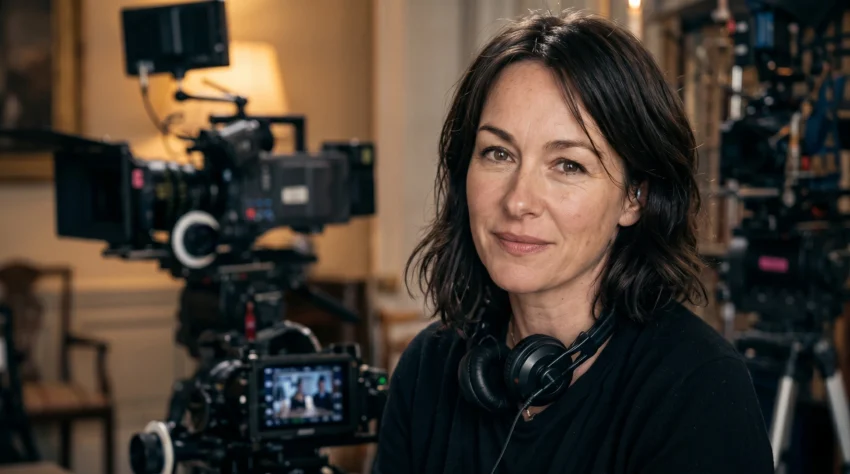
Marie Fargus’s name reached many viewers not through an interview, a red carpet, or a starring role, but through a brief dedication at the end of an episode of Victoria. The tribute read “Marie Fargus 1977–2017,” and for many people it turned a quiet production credit into a question: who was she, and what happened to her? The answer is both simple and incomplete in the way many private lives are incomplete in public records. Fargus was a British film and television production professional who worked behind the scenes on well-known dramas, died in 2017, and was remembered by colleagues on one of the shows she helped make.
Her story matters because it points to the people television depends on but rarely introduces. Fargus was not a public celebrity, and the available record does not support a heavily dramatized account of her life. What it does show is a working career across British film and television, including credits on Victoria, Peaky Blinders, Jonathan Strange & Mr Norrell, Heartbeat, and other productions. It also shows the limits of responsible biography when a private person’s name becomes searchable because of a public memorial.
Who Was Marie Fargus?
Marie Fargus was a British production worker whose screen credits place her in the practical heart of television-making. She worked in production department roles, including production secretary, assistant production coordinator, and production coordinator. Those jobs do not usually make someone famous, but they are vital to the daily running of a film or television shoot. In Fargus’s case, her credits suggest a steady, respected career built in production offices rather than in front of the camera.
The main reason readers search her name today is her connection to Victoria, the ITV period drama starring Jenna Coleman as Queen Victoria. Fargus worked as a production coordinator on the series, and after her death the show dedicated an episode to her memory. Viewers who saw the memorial card often assumed she might have been an actress, a historical figure, or someone connected to the royal story. In fact, she was part of the real modern team that helped bring that story to screen.
Because Fargus was not a public-facing figure, many personal details about her life remain outside the public record. Her family background, education, relationships, and private circumstances have not been widely documented in reliable sources. That absence should not be treated as a mystery to be solved through guesswork. It is better understood as the boundary between public credit and private life.
Early Life and Family Background
The public record gives Marie Fargus’s years as 1977 to 2017, meaning she was about 40 when she died. Beyond that, verified information about her early life is limited. There are no widely available, reliable public accounts that establish her hometown, parents, siblings, schools, or childhood ambitions. For a biography, that kind of gap matters because it prevents a writer from responsibly building a detailed childhood narrative.
What can be said is that Fargus entered a field that rewards persistence, organization, and trust. Production work is often learned through experience as much as formal training, with many careers starting in junior office roles before moving into larger responsibilities. Her later credits show someone who had earned repeat work across busy British productions. That kind of record usually reflects competence more than luck.
Not many people know this, but behind-the-scenes careers can be harder to reconstruct than acting careers even when the work is substantial. Actors leave interviews, publicity pages, headshots, and reviews. Production staff often leave only credit listings and the memories of people who worked beside them. Fargus’s biography has to be written with that reality in mind.
Building a Career Behind the Camera
Fargus’s listed credits begin in the mid-2000s, when she worked as a production secretary on British television projects. Early credits associated with her include Hollyoaks: Let Loose, Grange Hill, and Heartbeat. Those shows represented different corners of British television, from youth drama and soap-adjacent storytelling to long-running regional drama. For a production worker, each offered experience in fast-moving environments where small mistakes could ripple through a day’s filming.
A production secretary is often one of the first points of contact inside the production office. The role can involve paperwork, schedules, call sheets, travel details, messages, crew information, and general support for the production manager and coordinator. It is not glamorous work, but it is often where people prove whether they can handle pressure. The title may sound modest, yet the role demands accuracy, patience, and calm.
Fargus’s career appears to have developed through exactly that kind of practical experience. She moved through production-office roles on several projects before later credits identified her as an assistant production coordinator and production coordinator. That progression suggests growing responsibility and trust. In film and television, those are not ceremonial titles; they are earned through reliability across long days and changing plans.
Credits Across British Television
Before Victoria, Fargus worked on productions that had very different creative identities. Heartbeat was a long-running drama with a strong place in British television culture. Grange Hill had its own history as a school-based series that shaped generations of younger viewers. Peaky Blinders, where Fargus is credited in the production office, later became one of the most internationally recognized British dramas of its era.
Her credits also include Inspector George Gently, DCI Banks, and Monroe, all of which reflect the steady demand for capable production staff across police, medical, and period-adjacent drama. These shows may not all have had the same cultural reach, but they required the same basic production discipline. Crews had to move actors, equipment, paperwork, locations, and departments through tight schedules. Production staff like Fargus helped keep that machinery from breaking down.
By the mid-2010s, Fargus was credited on projects with more complex production demands. Jonathan Strange & Mr Norrell, a fantasy period drama, required coordination across costumes, locations, visual style, and a large creative apparatus. A Brilliant Young Mind, released in 2014, placed her within the world of feature film production as an assistant production coordinator. These credits show a worker comfortable across formats, from continuing television to limited series and film.
What a Production Coordinator Actually Does
To understand Marie Fargus’s importance, it helps to understand the job that made her valuable. A production coordinator helps manage the flow of information and logistics that allows filming to happen. The role can involve call sheets, crew lists, travel, accommodation, purchase orders, schedules, permissions, equipment movement, and communication between departments. It is one of those jobs that becomes most visible only when something goes wrong.
On a period drama, the pressure can be even greater. A show like Victoria has costumes, extras, historical locations, horses, props, set dressing, hair and makeup needs, and tight continuity demands. Every filming day depends on many departments arriving prepared at the right time and place. A production coordinator helps make that coordination possible before the cameras roll.
The truth is, audiences often credit the visible artistry while missing the labor that supports it. A scene may appear effortless because the production office absorbed the hard parts days or weeks earlier. That does not mean a coordinator is creatively invisible to colleagues. It means the work is embedded in the finished product rather than singled out by viewers.
Marie Fargus and Victoria
Victoria became the project that most publicly attached Fargus’s name to audience curiosity. The ITV drama premiered in 2016 and followed Queen Victoria’s early reign, combining court politics, personal relationships, and the scale expected of a prestige period series. Fargus worked as a production coordinator on the show across its early run. Her role placed her inside a demanding production that required careful planning and constant adjustment.
For viewers, Victoria was a drama about monarchy, marriage, duty, and public image. For the people making it, it was also a workplace with schedules, budgets, weather, location constraints, and the practical problems that come with filming historical drama. Fargus’s title suggests she helped manage the production framework that allowed the show to function. That is why the later tribute carried real meaning within the production community.
The memorial dedication appeared on the episode “A Soldier’s Daughter,” which aired during the show’s second season. It identified her by name and years, “Marie Fargus 1977–2017.” The wording was brief, as television dedications often are. But its presence told viewers that she had mattered to the people behind the series.
What Happened to Marie Fargus?
Marie Fargus died in 2017, at about 40 years old. That is the core confirmed fact behind the search phrase “what happened to Marie Fargus.” Her death was acknowledged publicly through the Victoria dedication, which is the source that brought her name to wide viewer attention. The tribute did not provide details about the cause or circumstances of her death.
Some online accounts have claimed that Fargus died in a car accident. That claim appears in search results and secondary write-ups, but it is not consistently supported by strong public documentation. Without a reliable official record, a family statement, a reputable obituary, or established news reporting, it should not be repeated as settled fact. The responsible position is that the exact circumstances of her death have not been clearly confirmed in the public record.
This distinction matters because Fargus was a private person. Curiosity is understandable, especially when a memorial appears on a popular television series. But curiosity does not remove the need for care. A respectful biography should say what is known, identify what is uncertain, and avoid turning an unverified detail into a permanent label.
Why the Tribute Sparked So Much Curiosity
Television memorials often create a moment of public pause. A viewer sees a name, a date range, and a quiet dedication, then wonders how that person was connected to the show. If the person was an actor or well-known writer, the answer is usually easy to find. With crew members, the trail can be much thinner.
That is what happened with Marie Fargus. Her name appeared in a meaningful place, but not in a way that explained her biography. Search users then found a mix of credit pages, short articles, and repeated claims, some more careful than others. The result was a small internet puzzle built around a real person’s death.
Here’s where it gets interesting: the tribute itself may tell us more than the surrounding speculation. Productions do not usually dedicate episodes to people without a close connection to the work. The dedication suggests professional affection, respect, and loss inside the Victoria team. It does not, however, give permission to invent the private parts of her story.
Public Image and Industry Standing
Marie Fargus did not have a public image in the celebrity sense. There is no widely documented record of major interviews, personal branding, publicity campaigns, or public controversies. Her standing appears instead through the productions that employed her and the memorial that honored her. For behind-the-scenes professionals, that is often the most visible form of recognition available.
Her credits across multiple British productions suggest she was part of the working fabric of the industry. Film and television crews are networks of trust, and people often move from one job to another through recommendations and proven performance. A production office depends on people who can manage pressure without drawing attention to themselves. Fargus’s repeated credits indicate that she had built a place in that world.
It would be wrong to overstate her fame, just as it would be wrong to minimize her contribution because she was not famous. Her career was not measured in celebrity coverage. It was measured in completed productions, working relationships, and the respect of colleagues who chose to remember her on screen. That is a different kind of public record, but it is still meaningful.
Family, Relationships, and Private Life
There is little reliable public information about Marie Fargus’s family, marriage, children, or personal relationships. Some search users look for those details because biography articles often include them, but not every life is publicly documented in that way. For Fargus, there is no strong basis for naming relatives or describing private relationships in detail. Any article that claims otherwise without proof should be read cautiously.
This absence does not mean she lacked a rich personal life. It only means her private life was not widely recorded for public consumption. Many people who work in entertainment remain private even when their professional names appear in screen credits. That privacy deserves respect, especially after death.
A responsible profile should resist the urge to fill emotional space with invented intimacy. It is enough to say that Fargus was remembered by colleagues and connected to a body of professional work. The public tribute from Victoria gives a glimpse of how she was valued in her working community. The rest belongs, unless shared by those close to her, outside the public story.
Money, Net Worth, and Career Earnings
There is no credible public estimate of Marie Fargus’s net worth. Any exact figure attached to her name would be speculative unless supported by estate filings, verified financial records, or reliable reporting. Production coordinators and production secretaries earn income through project-based work, but earnings vary widely by production size, contract, experience, union terms, and length of employment. Fargus’s credits show professional activity, not a basis for a precise wealth estimate.
It is also important to avoid applying celebrity finance logic to behind-the-scenes workers. Fargus was not a star with endorsement deals, public business ventures, or widely reported salaries. Her income would most likely have come from television and film production work. That is a respectable professional path, but it does not produce the kind of public financial paper trail associated with famous performers.
Readers often search net worth because biography sites train them to expect it. In this case, the honest answer is that no trustworthy number is available. The better measure of her career is the range and quality of productions that credited her. Those credits provide evidence of professional contribution, while net worth claims would only create false certainty.
Misunderstandings About Her Story
The biggest misunderstanding is that Marie Fargus was a cast member on Victoria. She was not known as an actress on the show; she worked in the production department. The confusion is understandable because viewers usually see memorial cards without job titles or explanations. Still, the distinction matters because it changes the whole shape of her story.
Another misunderstanding is that her death was part of a public mystery. There is no solid evidence that she disappeared, was involved in a scandal, or became the subject of an official public controversy. The available record points to a private death followed by a professional tribute. Turning that into mystery content says more about internet habits than about Fargus herself.
A third misunderstanding involves the repeated car accident claim. It may be true, but the public evidence commonly attached to it is not strong enough to treat it as confirmed. Careful writing should not erase uncertainty just to make the story feel complete. In biography, restraint can be a form of respect.
Why Marie Fargus Still Matters to Viewers
Marie Fargus still matters because her name stands for a category of workers audiences rarely notice. Every polished television episode carries the labor of people who organize, schedule, coordinate, repair, transport, document, and solve. Their names move quickly through the credits, often while viewers reach for the remote. A memorial card interrupts that routine and asks the audience to notice one person.
Her story also matters because it shows the limits of public knowledge. Modern search culture can make every name feel like a puzzle that should have a complete answer. But some answers are partial because the person lived privately, not because someone failed to look hard enough. Fargus’s case asks readers to accept a quieter kind of truth.
There is a lesson here for anyone who loves film and television. The work we remember on screen is supported by people whose careers may never be famous but are still essential. Marie Fargus was one of those people. The tribute on Victoria remains a small public sign of a larger private loss.
Frequently Asked Questions
Who was Marie Fargus?
Marie Fargus was a British film and television production professional. She worked behind the scenes in production department roles, including production secretary, assistant production coordinator, and production coordinator. Her credits included Victoria, Peaky Blinders, Jonathan Strange & Mr Norrell, A Brilliant Young Mind, and several other British productions. She became more widely searched after Victoria dedicated an episode to her memory.
What happened to Marie Fargus?
Marie Fargus died in 2017, when she was about 40 years old. The ITV drama Victoria later honored her with a dedication that read “Marie Fargus 1977–2017.” The exact public circumstances of her death have not been clearly confirmed in the strongest available records. Claims about a car accident circulate online, but they should be treated cautiously unless backed by stronger evidence.
Was Marie Fargus an actress?
Marie Fargus was not known as an actress. Her public credits place her in production work rather than on-screen performance. Viewers sometimes assume she was a cast member because her name appeared in a Victoria dedication. In reality, she was part of the behind-the-scenes team that helped the show function.
Why did Victoria dedicate an episode to Marie Fargus?
Victoria dedicated an episode to Marie Fargus because she had worked on the series. Memorial dedications are often used to honor members of a cast or crew who have died. In Fargus’s case, the tribute reflected her connection to the production and the regard of colleagues who worked with her. The dedication is the main reason many viewers later searched for her name.
Did Marie Fargus work on Peaky Blinders?
Marie Fargus is credited in production work connected to Peaky Blinders. That credit is part of a broader career across British television rather than evidence that she was a public creative face of the series. Her work belonged to the production side, where coordination and organization support what viewers see on screen. It is one of several notable projects linked to her professional record.
What was Marie Fargus’s net worth?
There is no reliable public estimate of Marie Fargus’s net worth. Any exact number would be speculative because her personal finances were not publicly reported. Her income likely came from film and television production work, but rates and earnings would have varied by project and contract. The available public record supports her career credits, not a verified financial profile.
Is there a full obituary for Marie Fargus?
A widely cited, detailed public obituary for Marie Fargus is not easy to establish from the available record. Most public attention comes from screen credits and the Victoria memorial dedication. That lack of a full obituary is not unusual for a private industry professional. It means writers should avoid adding unsupported details about her family, death, or private life.
Conclusion
Marie Fargus’s story is not the kind of biography that arrives with public speeches, archived interviews, and decades of press clippings. It is the story of a skilled production professional whose work helped support British television and film from inside the machinery of production. Her name became widely searched because colleagues honored her, not because she sought public attention. That difference should shape how her life is written about.
The most honest answer to “what happened to Marie Fargus” is that she died in 2017 and was remembered by the team behind Victoria. The surrounding details, especially claims about the cause of death, should be handled with care because the public record does not firmly confirm them. A complete article does not have to pretend certainty where none exists. It has to give readers the clearest, fairest account available.
Fargus’s place in television history is modest but real. She belonged to the group of workers who make ambitious productions possible while rarely becoming known outside the industry. Her memorial on Victoria gave viewers a brief chance to see one of those names and ask who stood behind it. The answer is a working professional, remembered by her colleagues, whose life should be treated with the same care she likely brought to her work.